
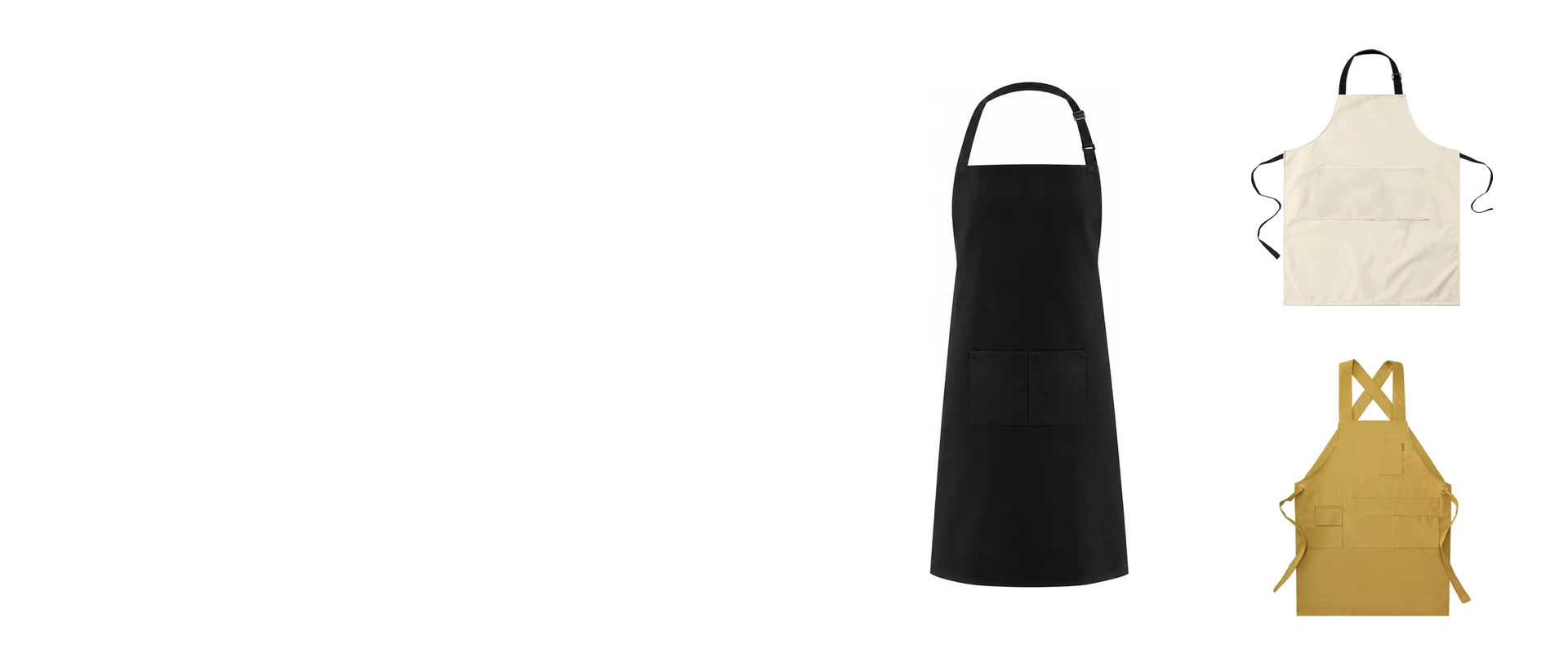
Custom Chef Apron
LuxoApron manufactures custom chef aprons, helping kitchen teams and brands develop designs for the way their chefs work.
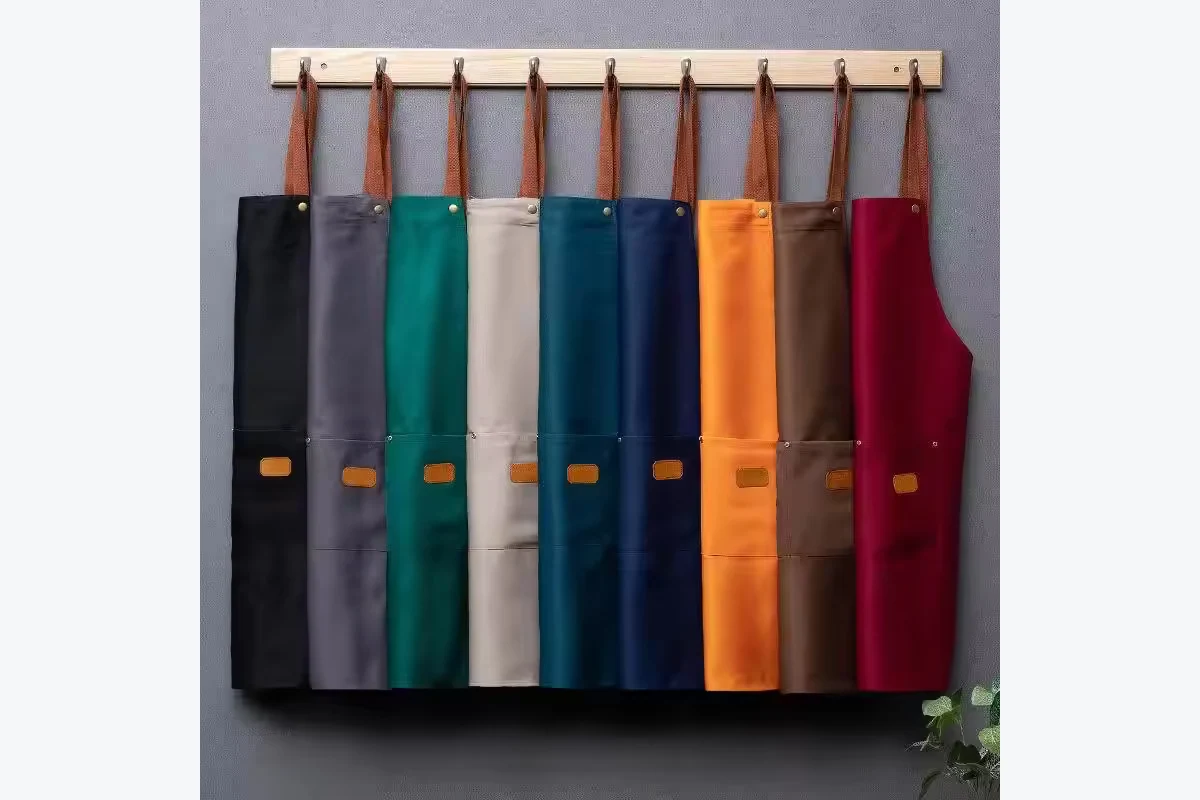
Chef Aprons Made for Your Kitchen
- MOQ: 50 pieces per style.
- Chest-to-leg coverage combines with an adjustable neck strap, waist ties, and a practical pocket layout.
- Coordinated colors, embroidered or printed logos, and brand labels carry your kitchen’s identity.
- Materials include cotton canvas, polyester-cotton, and coated fabric, with a 250–450 g/m² category reference range.
- ISO 9001, BSCI, OEKO-TEX Standard 100, GRS, and REACH documentation is available with its applicable scope.
6 Reasons to Choose LuxoApron for Chef Aprons
We support your kitchen apron project from the first reference through sampling, production checks, and dispatch.

1. Kitchen Apron Experience
Our range includes chef, bib, and other hospitality aprons. We work with the coverage and construction details needed for kitchen uniforms.

2. Fit and Sample Development
We can develop the pattern from a photo, sketch, reference apron, or technical pack. Samples let your team review the coverage, fit, and working details before production.

3. Cutting and Sewing Capabilities
Our factory carries out cutting, sewing, accessory installation, finishing, and packing. Reinforced strap joins and pocket construction can be included in the approved specification.

4. Uniform Branding Support
We coordinate the apron design with your logo, labels, and packing requirements. This helps the finished order fit the identity of your restaurant or brand.

5. Checks Against Your Specification
Incoming, in-process, and final checks cover materials, dimensions, stitching, pocket positions, and accessories. Final inspection follows AQL or customer requirements.

6. Production and Delivery Support
Production photos and videos are available, and we can cooperate with third-party inspection. We also prepare export documents and arrange packing and shipping for the order.
Create a Chef Apron for Your Team
Explore longer canvas designs, easy-care blends, wider coated styles, or reinforced pockets. Share the design you have in mind, and we will help develop it.
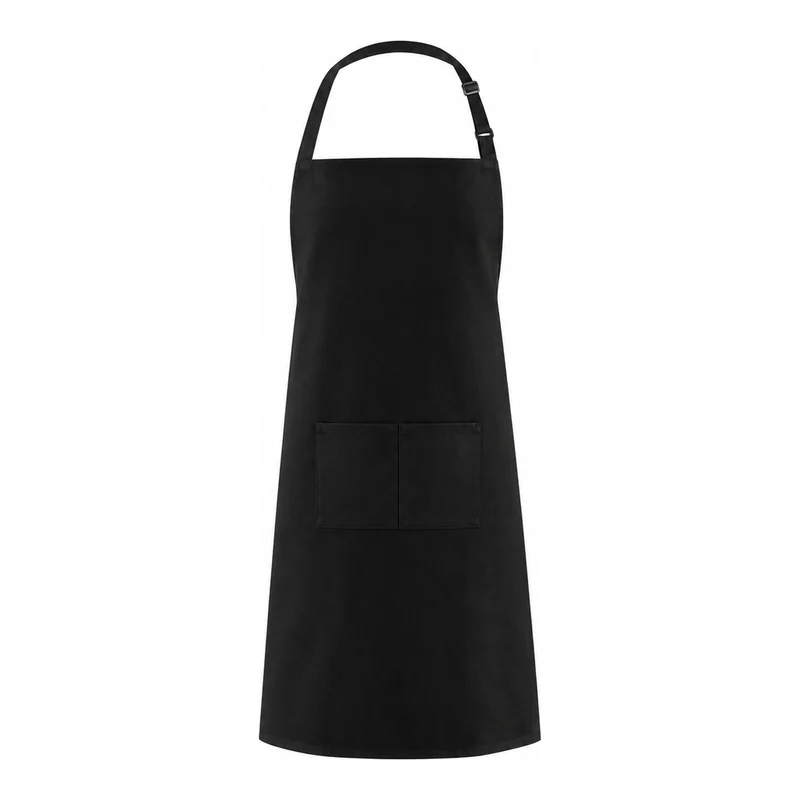
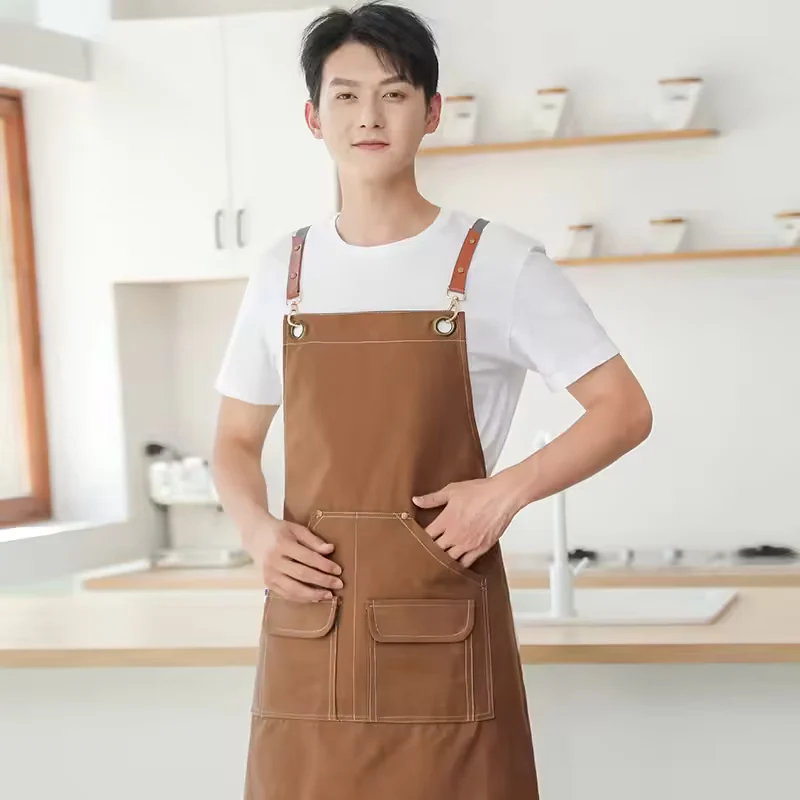
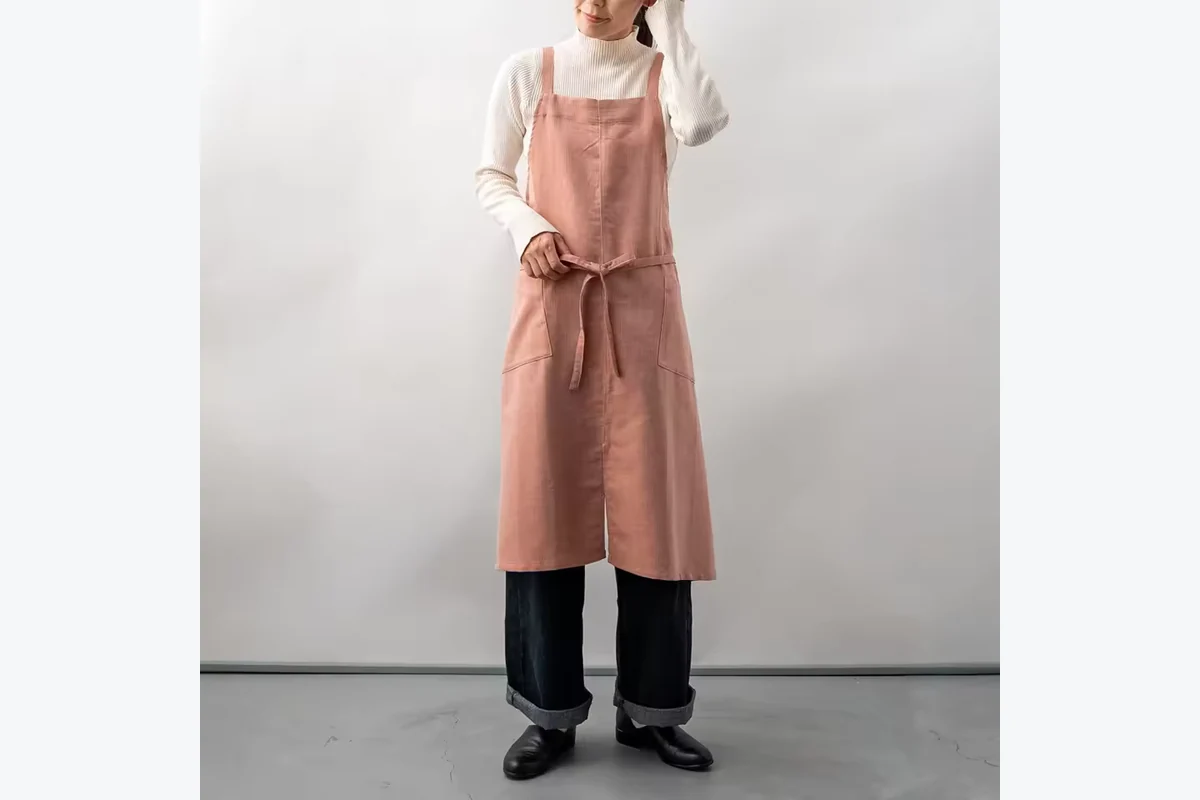
Longer Coverage and Adjustable Fit
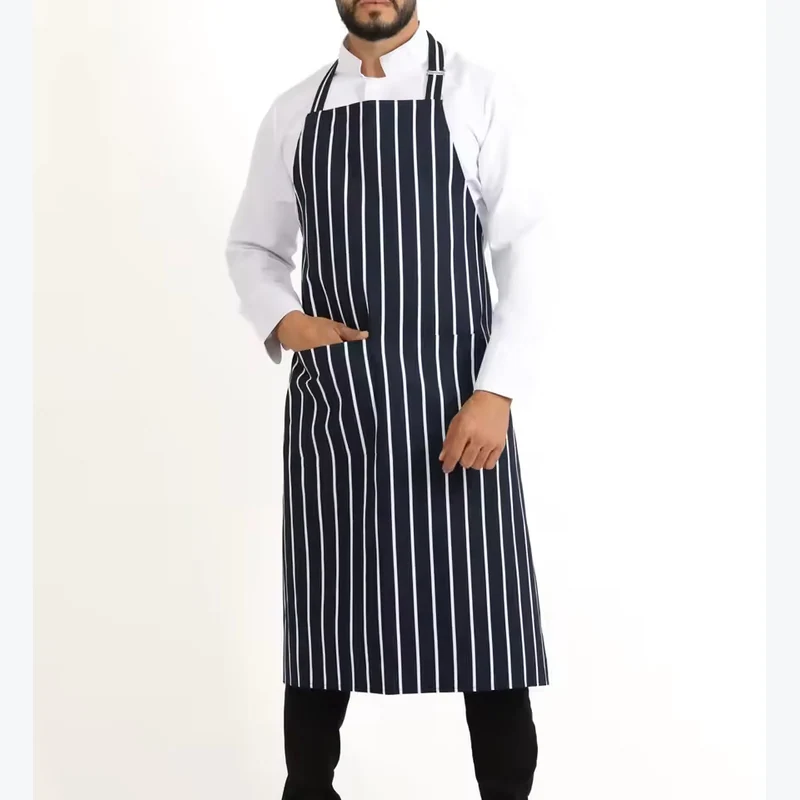
Longer body panels extend coverage from the chest toward the knees or calves. Body shape and strap lengths work together to position the apron on the wearer.
- Knee or Calf Length
Chef styles can extend to the knee or calf. The general adult apron-length reference is 70–90 cm; finished length depends on the wearers and chosen hem position. - Body Width and Hem
The general adult body-width reference is 60–80 cm. A wider hem adds leg coverage, with the final shape set by your size chart or approved pattern. - Adjustable Neck Strap
An adjustable neck strap positions the bib across the chest. A 60–80 cm strap is the general adult reference; bartacks or multiple stitch lines reinforce the attachment. - Waist Ties
Waist ties hold the apron body around the wearer. The general adult tie reference is 90–120 cm, with reinforced joins and final lengths matched to the pattern.
Fabric Weight, Feel, and Care
Canvas offers a substantial woven feel, polyester-cotton is easier to care for, and coatings change the surface. The fabric and finish together determine how the apron fits your kitchen routine.
- Cotton Canvas
Cotton canvas gives the apron a substantial woven feel. It is a useful starting point when your kitchen uniform needs body and a surface for embroidery or printing. - Polyester-Cotton
A polyester-cotton blend is less prone to wrinkling and offers easier care. It suits kitchens where keeping uniforms presentable between uses is a priority. - Coatings and Repellent Finishes
Coated fabrics and water- or oil-repellent treatments are available for kitchen apron projects. The selected fabric and finish determine the specification and care requirements. - Fabric Weight
The chef-apron category has a 250–450 g/m² reference range, with actual weight specified for the selected material. Samples show how lighter and heavier options differ in feel.
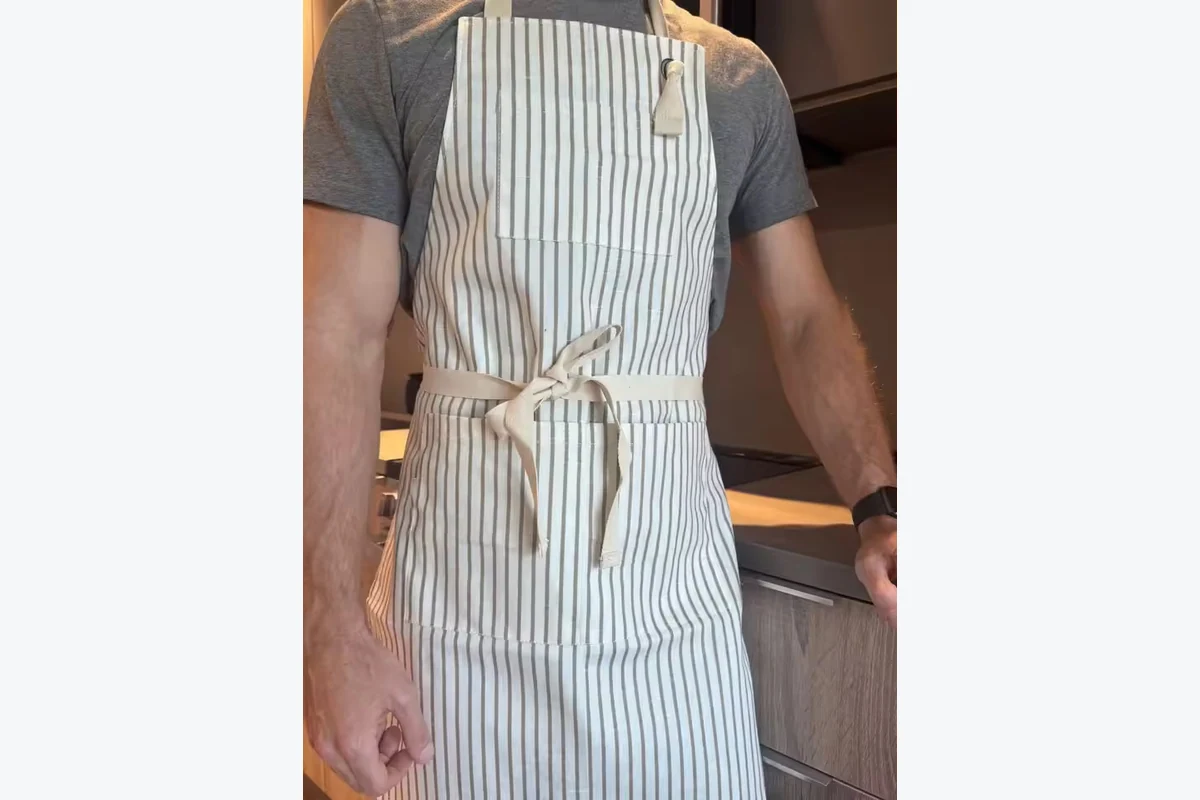
Keep Kitchen Pockets Simple and Useful
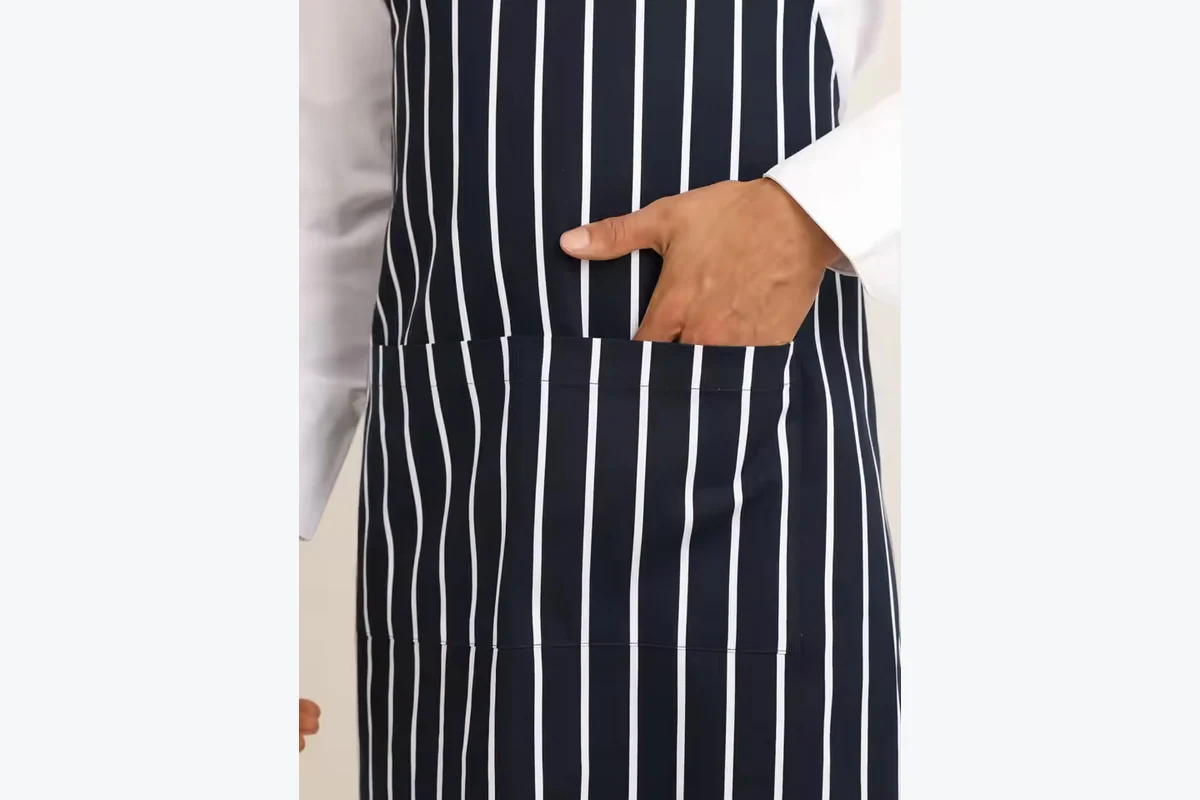
Chef aprons often use fewer, larger pockets. Their size and position follow the utensils and small items your team needs close at hand.
- Larger Pocket Openings
A larger opening provides access for bulkier kitchen items. The opening and pocket depth are tailored to the items your team carries. - Fewer Pocket Divisions
Fewer divisions leave larger spaces for kitchen essentials. Pocket count follows the working tasks, keeping the front layout simple. - Reinforced Pocket Interiors
Internal reinforcement adds support to the pocket construction where needed. The sample shows the fabric layers and stitching used in that area. - Pocket Position
Pocket position is set together with apron length to keep storage within reach. This avoids placing the pocket too high or too low on the wearer.
Add the Details That Identify Your Kitchen
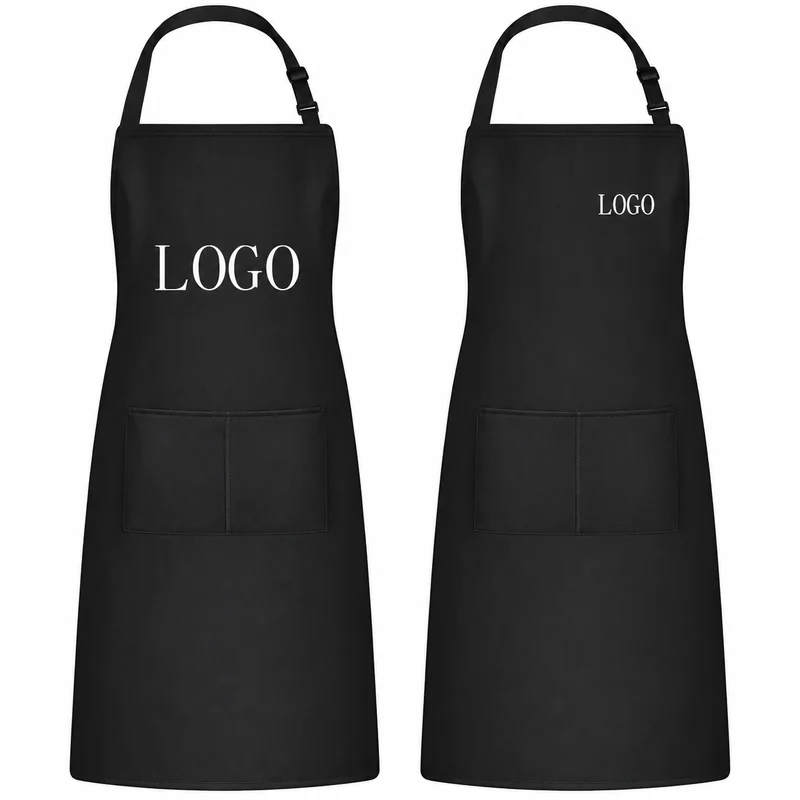
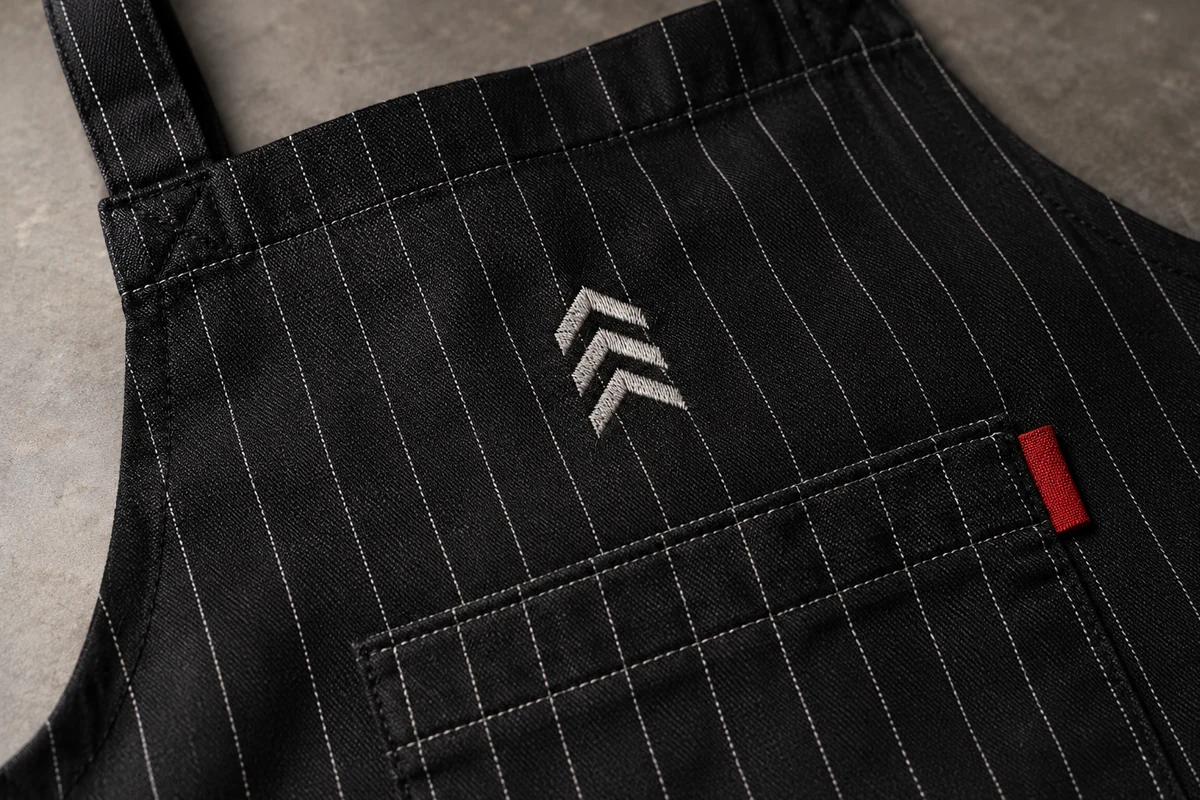
Coordinated color, a visible logo, and your own labels create a consistent kitchen uniform. Decoration methods vary with the selected fabric.
- Embroidered Logos
Embroidery gives a logo a stitched, raised finish on cotton canvas. A clear design works well for a restaurant name or kitchen brand. - Printed Artwork
Screen printing is available for cotton canvas, while heat transfer can suit polyester-cotton or coated fabrics. The artwork and material determine the suitable process. - Uniform Colors
Pantone or fabric color references guide a coordinated team uniform. The selected fabric’s actual color is part of sample approval. - Brand and Care Labels
Woven brand labels identify your kitchen or product line, while composition and care labels provide material information. Care instructions reflect the actual fabric, finish, and decoration in the order.
Pack Chef Aprons for Distribution or Retail
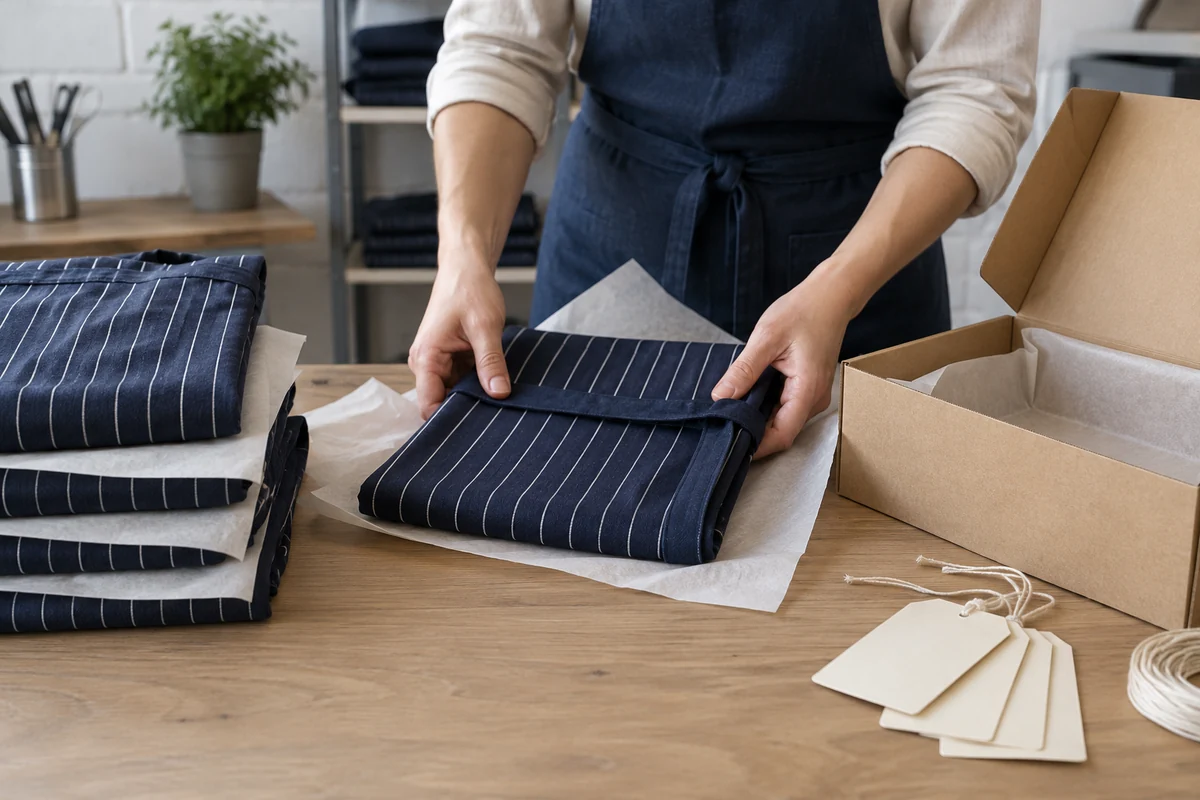
Individual bags keep aprons separate for kitchen teams, while paper wrapping, boxes, and hangtags offer retail presentation options. Labels and carton marks support distribution.
- Individual Bags
Individual plastic bags keep folded aprons separate for staff distribution or storage. Packaging labels identify the packed style. - Paper Wrapping
Acid-free paper adds a separate wrapping layer around the folded apron. It sits within the chosen pack for retail presentation. - Branded Boxes and Hangtags
Kraft paper boxes and branded hangtags provide options for a retail or gift presentation. The box structure and printed information follow the project requirements. - Carton Identification
Custom carton marks, barcodes, and packing lists help the receiving team identify an order. Their information follows the order’s item and quantity breakdown.
Chef Apron Materials and Supporting Documents
The base fabric and finish shape the apron’s feel and care needs. Supporting documents cover specific holders, materials, or scopes within that specification.
Available Materials
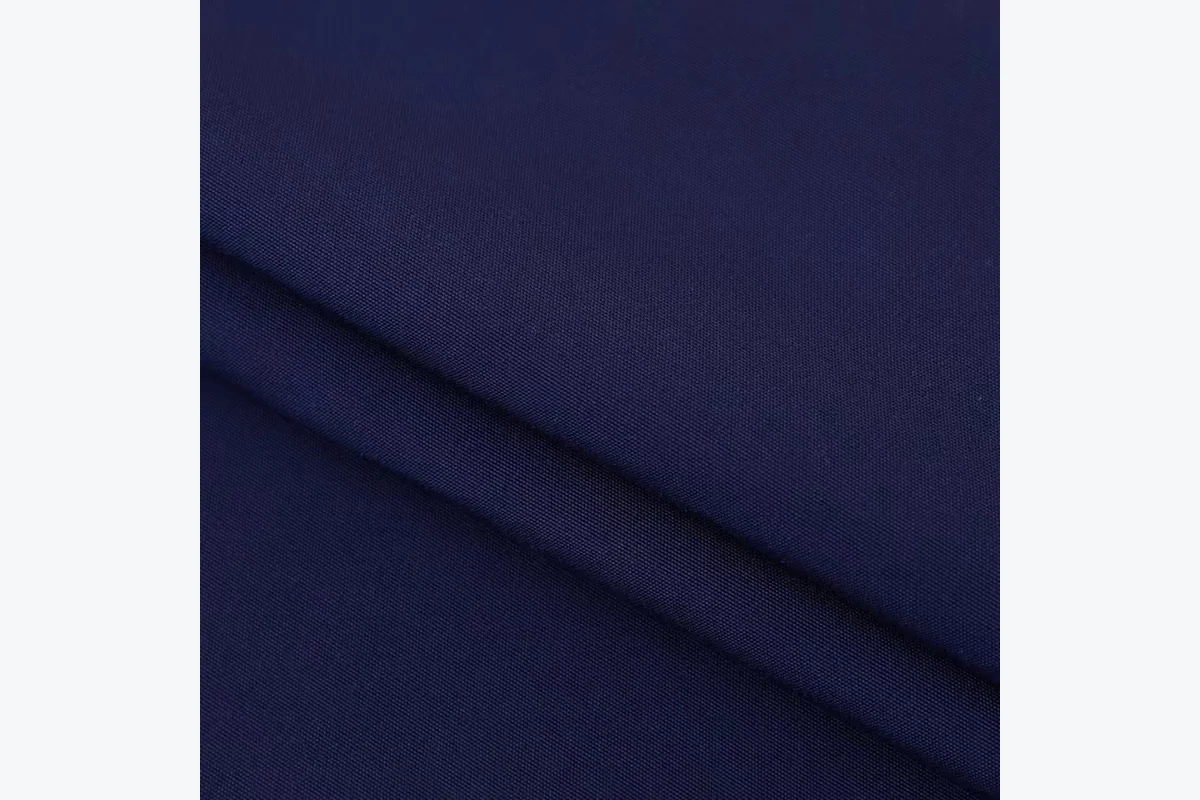
Cotton canvas, polyester-cotton, and coated fabrics are available for chef aprons. They offer different starting points for a woven uniform look, easier care, or a surface finish for kitchen use.
Discuss Materials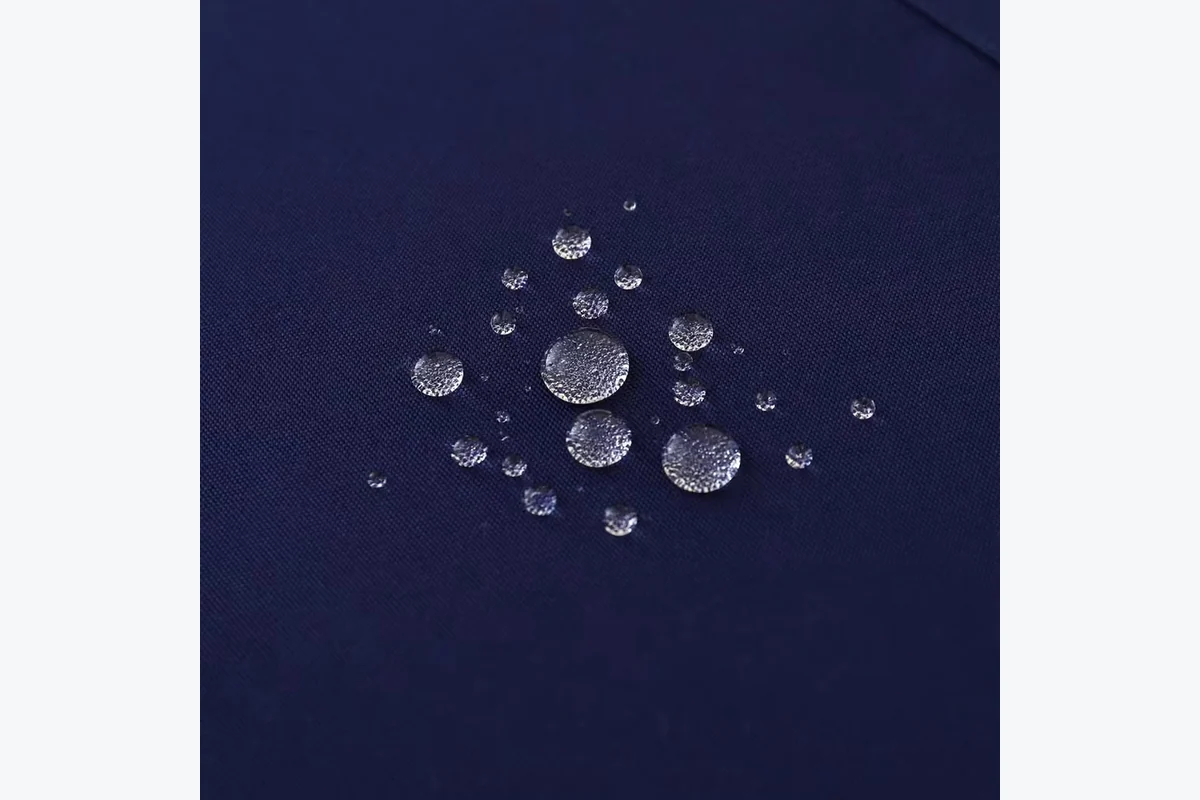
Canvas, Blend, or Coating
Canvas has a more substantial woven feel, while polyester-cotton is less prone to wrinkling. A coating changes the surface and its care needs; the fabric sample shows these differences alongside the planned weight and construction.
Compare Fabric Options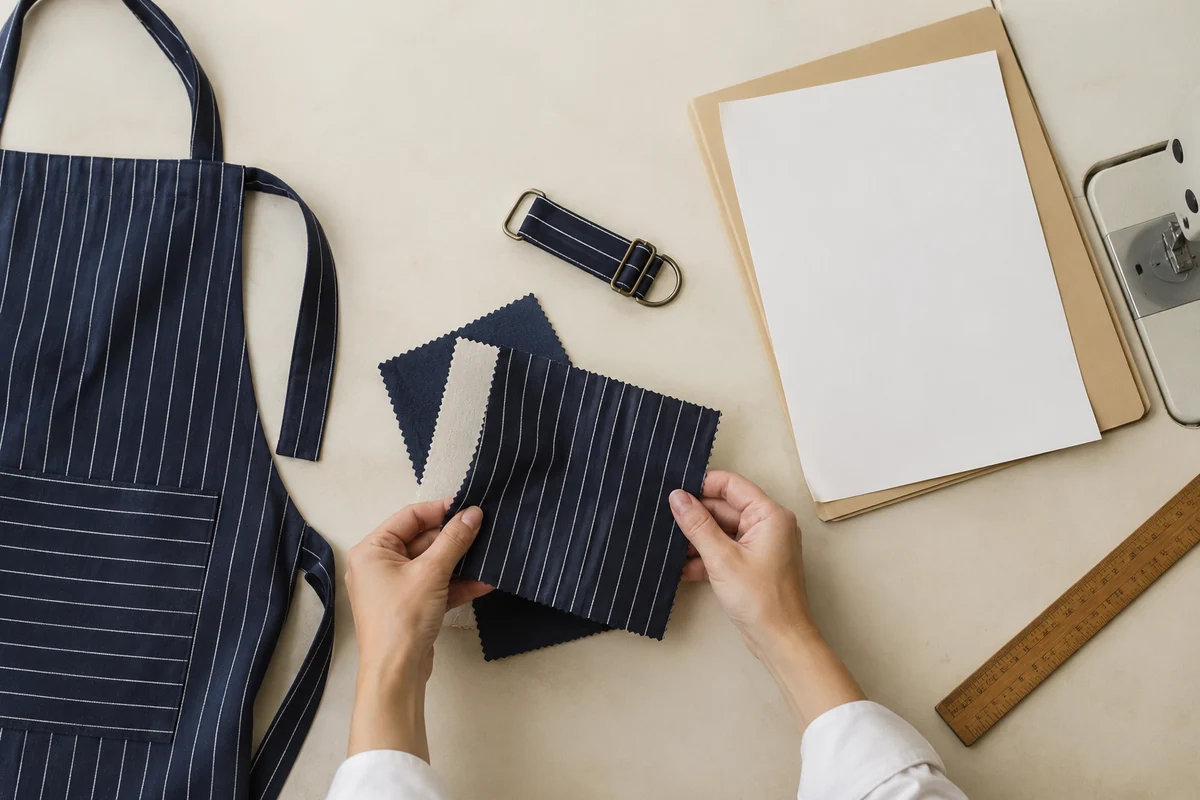
Applicable Documents
Available documents include ISO 9001, BSCI, OEKO-TEX Standard 100, GRS, and REACH. Each applies to its stated holder, material, or scope, and relevance depends on the selected apron specification.
Ask About Documents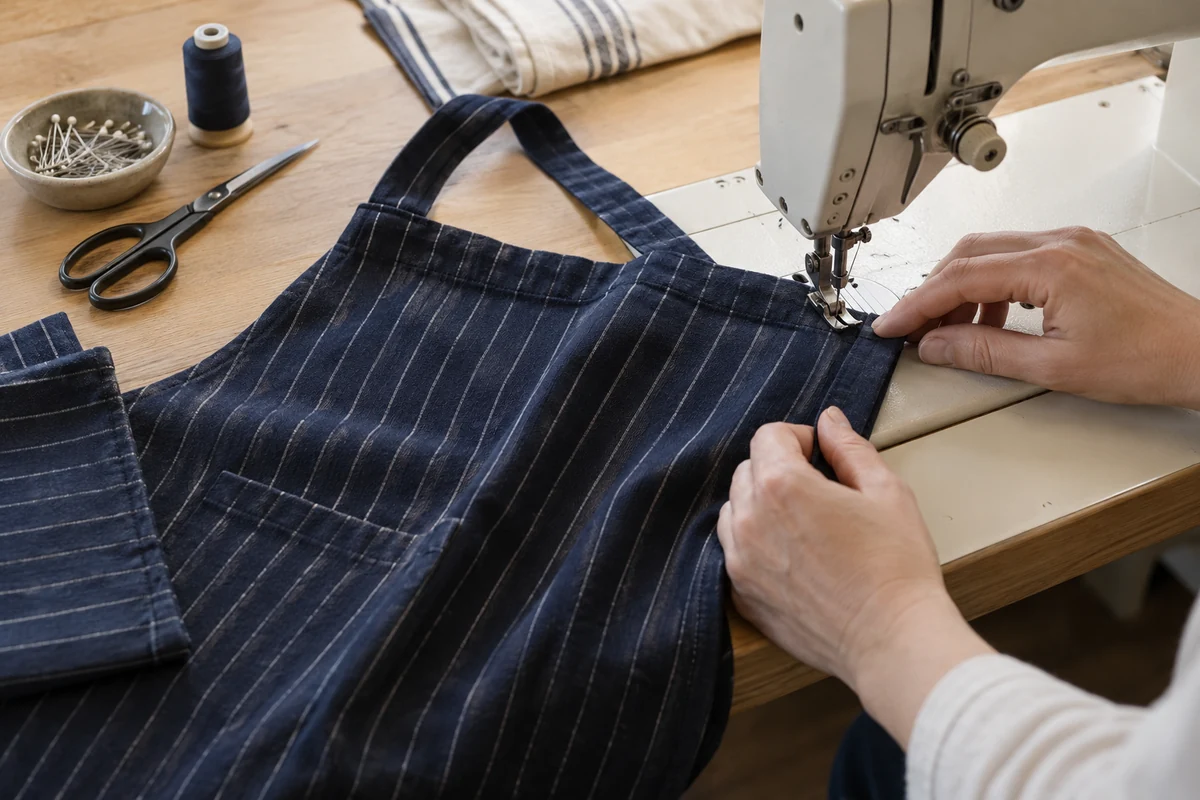
See How Your Chef Aprons Are Made
Cutting the long body panels, reinforcing neck and waist joins, sewing the pockets, and finishing the hem shape the coverage and construction of your chef apron.
Start Your Chef Apron Project
Tell us about your kitchen team, estimated quantity, and any design ideas or reference aprons you have. We can help you work through the remaining details.
Get a Custom QuoteQuestions About Ordering Chef Aprons
Order quantities, sample development, fabric care, and delivery details for kitchen apron projects.