Custom Work Apron
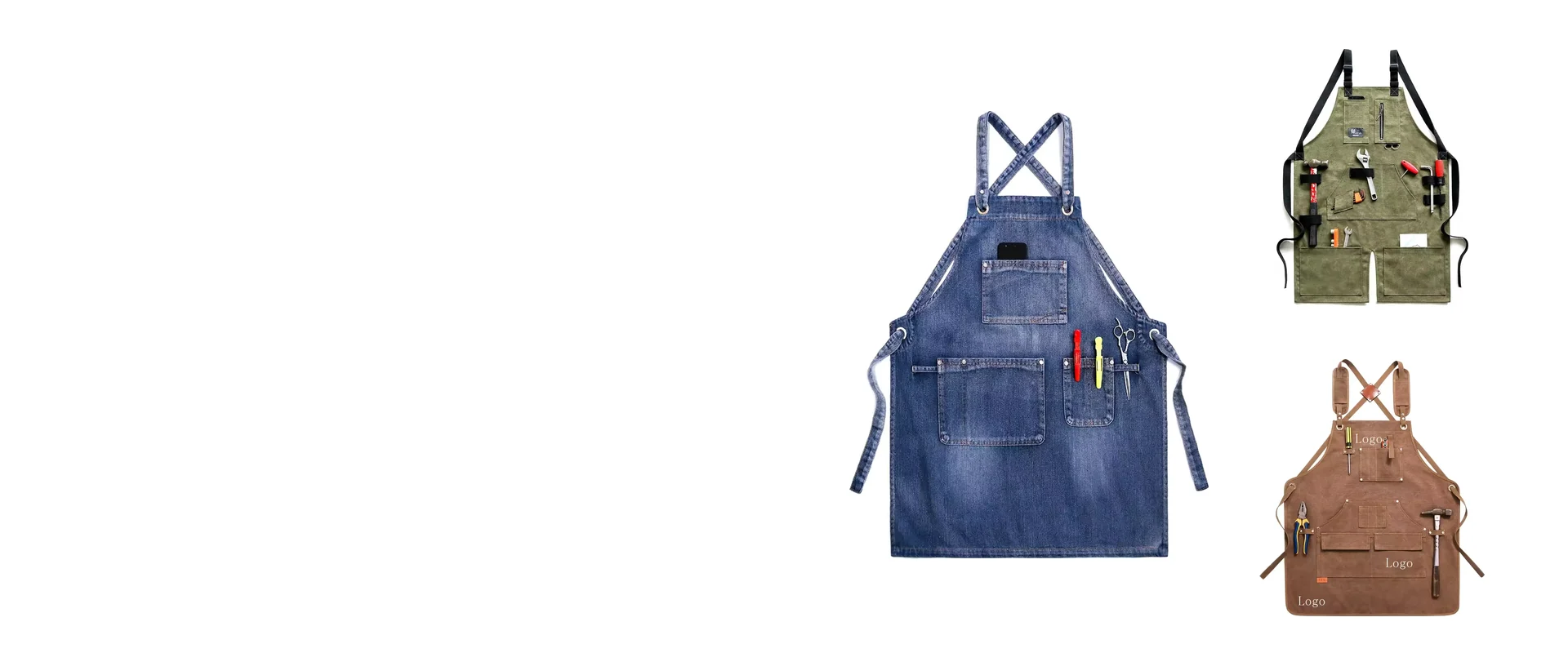
LuxoApron manufactures custom work aprons for workshops and trades, developing your ideas into aprons suited to the way your team works.
Work Aprons Built Around Your Tasks
- Order from 50 pieces per style.
- Body coverage, wide straps, and tool pockets can be tailored to the wearer and the task.
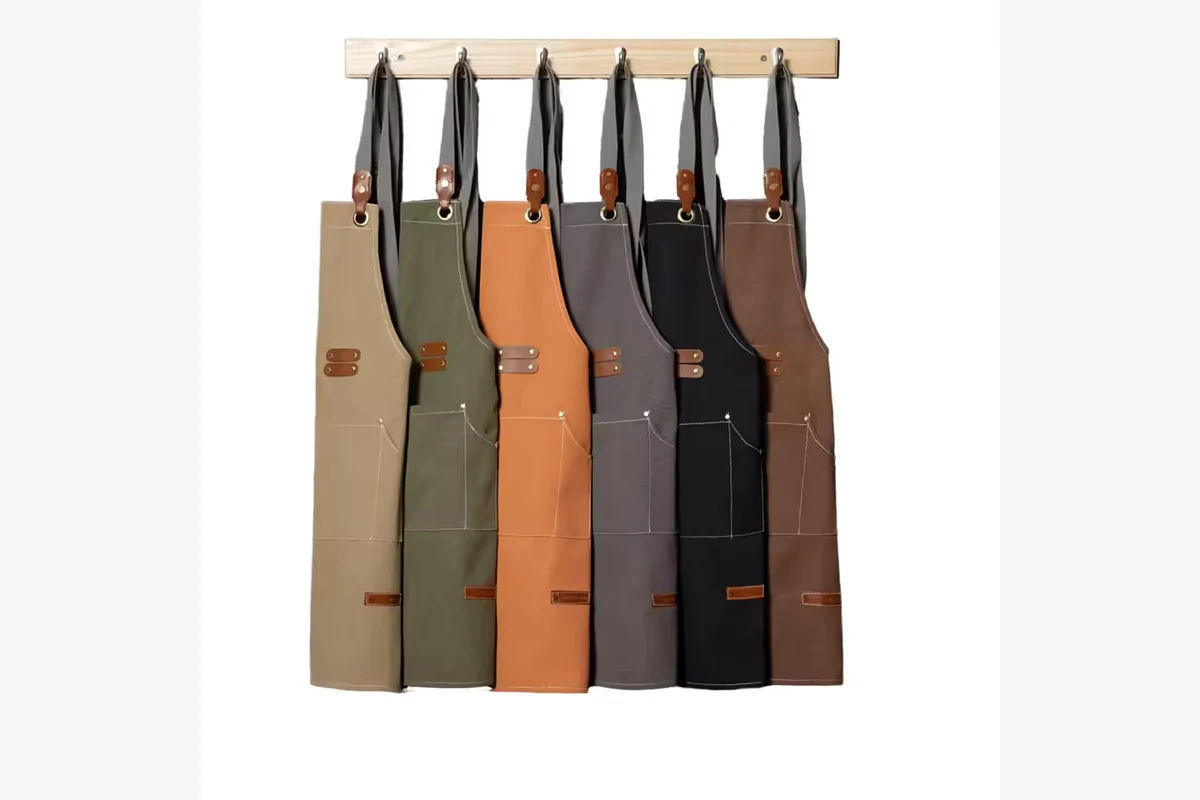
- Custom colors, embroidered logos, leather brand patches, and labels give workshop teams a coordinated look.
- Thick canvas, denim, and leather-panel designs are available, with a 300–500 g/m² material reference range depending on the construction.
- ISO 9001 quality-management and BSCI social-responsibility documentation is available within the scope of the applicable records.
6 Reasons to Choose LuxoApron for Custom Work Aprons
Our team helps turn a workshop brief into a sample, then carries the approved construction through production and shipment.

1. Work Apron Manufacturing
We have made aprons since 2016, including work designs with tool storage, heavy fabrics, and reinforced details.

2. Equipment for the Construction
Our factory has cutting, double-needle sewing, bartacking, and rivet-fitting equipment for the seams and attachment points in your design.

3. Development from Your References
A reference apron, sketch, or set of measurements gives us a starting point. We can adjust a base pattern and make a sample for your review before production.

4. A Consistent Brand Brief
We coordinate your approved artwork, labels, and product details so they follow the same brief across the order.

5. Material and Assembly Checks
Incoming, in-process, and final inspections check materials, dimensions, stitching, pockets, and hardware against the approved sample and requirements.

6. Production Updates and Dispatch
Production photos and videos are available. We also coordinate packing, quantities, and export documents for the agreed shipping arrangement.
Develop Your Work Apron Design
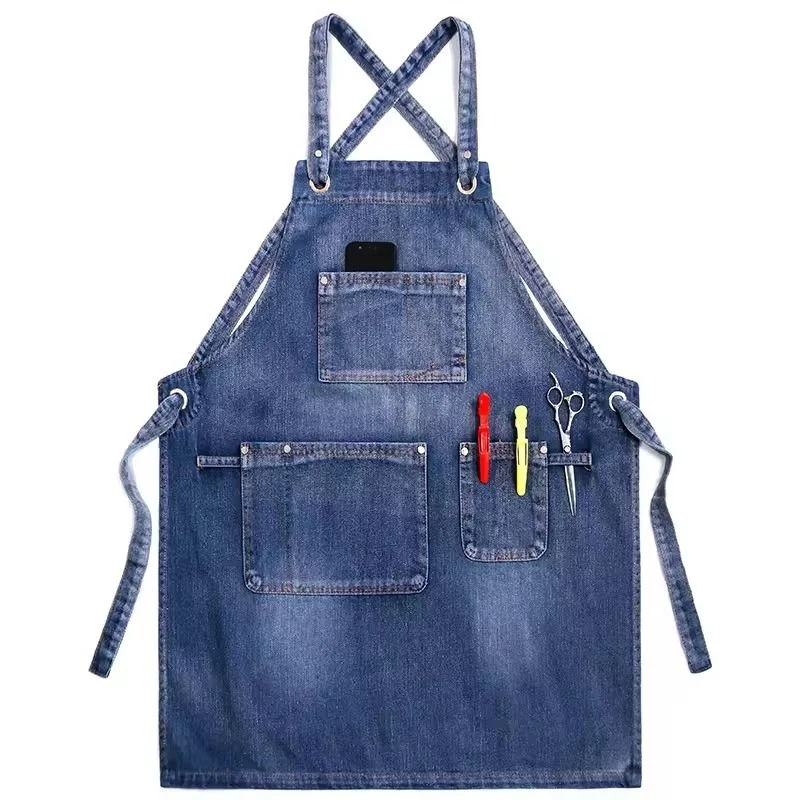
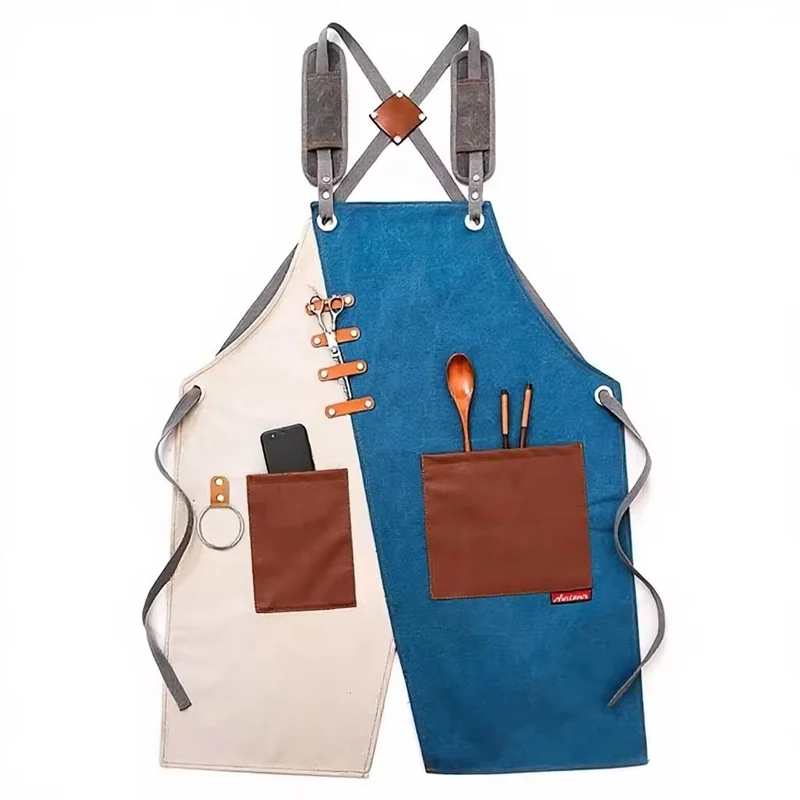
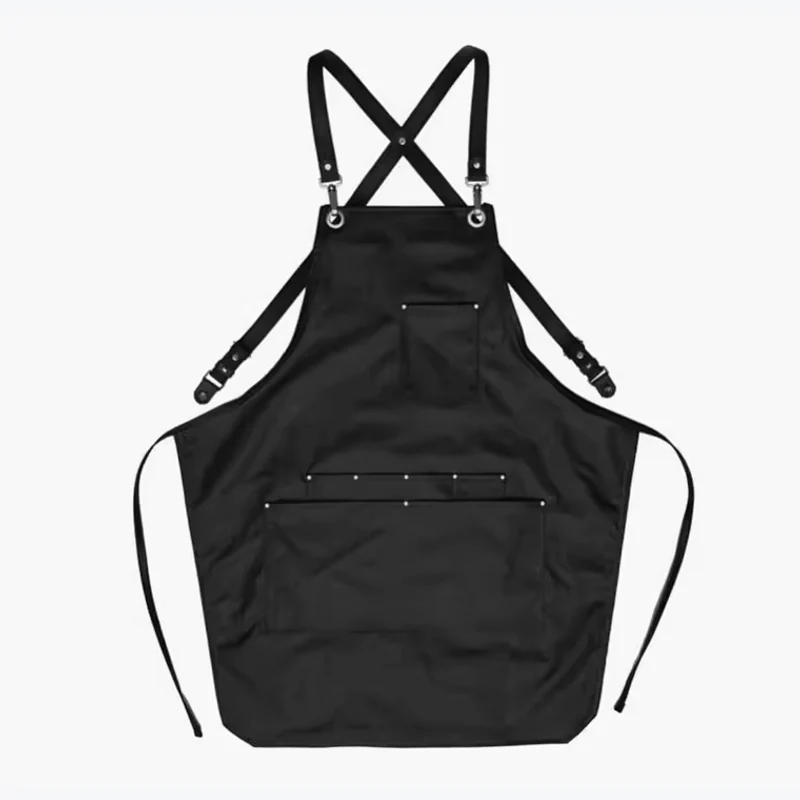
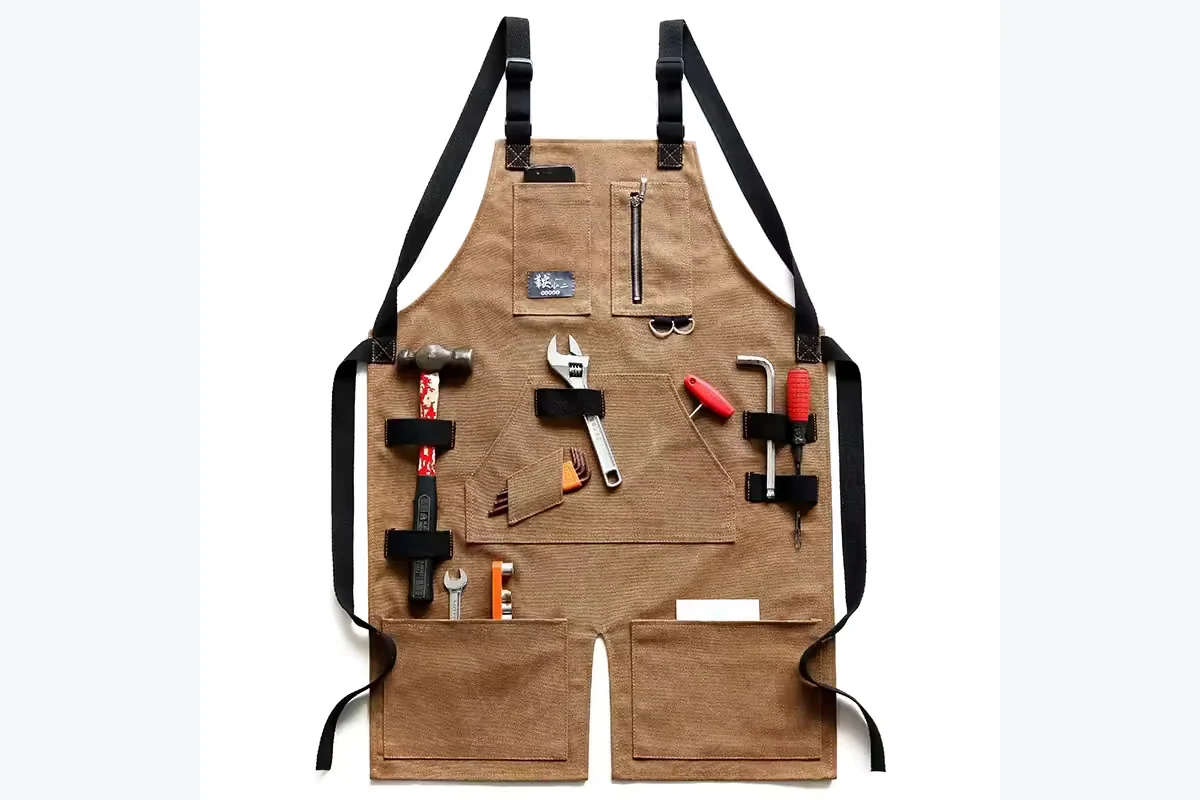
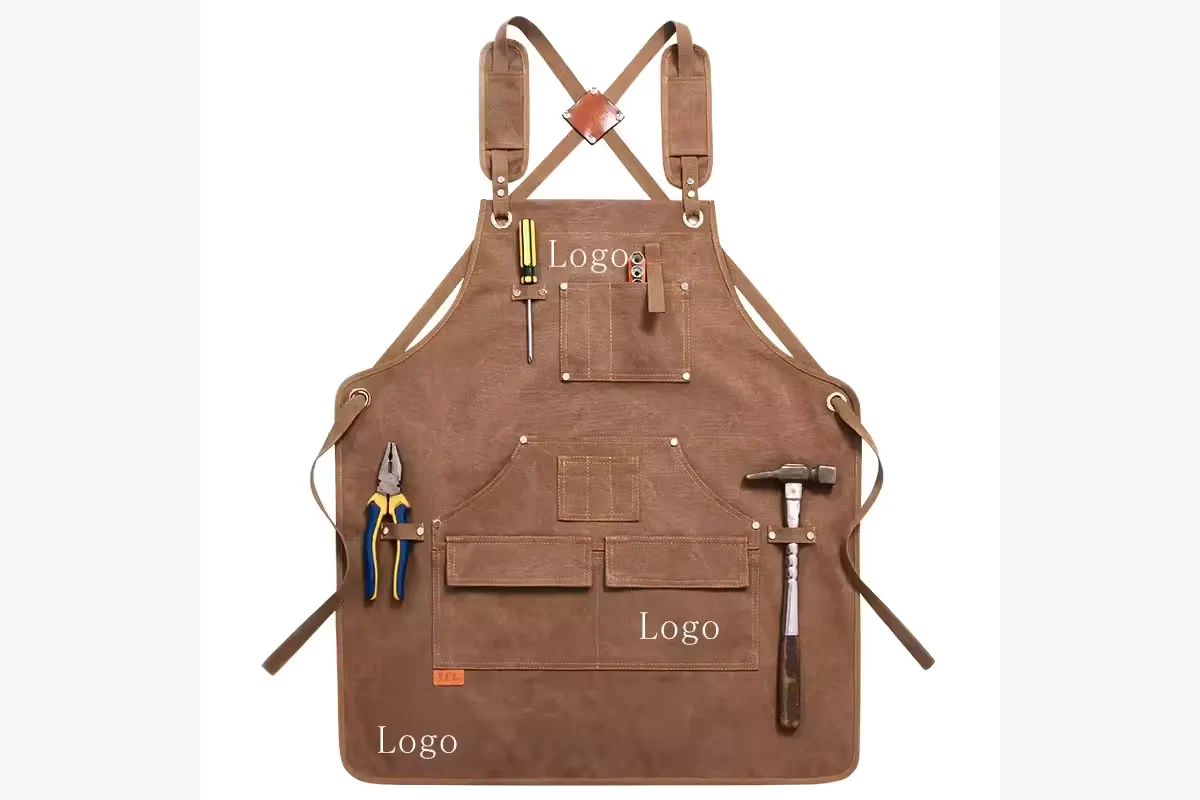
Explore hammer holders, ruler pockets, leather panels, and lined tool pockets, or bring us a different layout to develop around your work.
Put Tools Within Reach
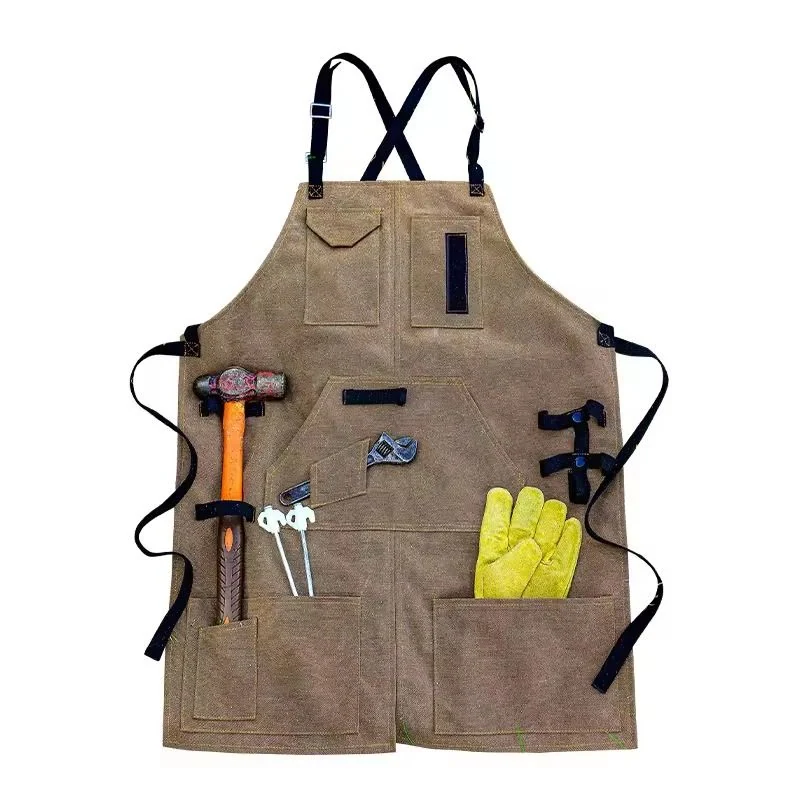
Dedicated pockets, holders, and rings give different tools their own place, with openings and positions matched to their shape.
- Large Tool Pockets
Spacious pockets hold larger items, while separate compartments organize smaller pieces. Pocket size and placement can follow your tool list and preferred working layout. - Ruler Pockets
A narrow ruler pocket gives a long measuring tool its own place. Its depth and opening follow the ruler’s dimensions, with the carrying position assessed on the sample. - Hammer Holders
A hammer holder provides a separate carrying point outside the main pockets. Its size and location follow the tool dimensions and working layout developed in the sample. - Metal Tool Rings
Metal rings provide attachment points outside the pockets. Their placement can follow the tools carried and the wearer’s reach.
Reinforcement for Pockets, Joins, and Edges
Extra stitching, metal fastenings, lining, and binding reinforce different parts of the apron’s construction.
- Bartacked Joins
Bartacks concentrate stitching at selected stress points, including pocket and strap joins that need reinforcement in the approved pattern. - Rivet Reinforcement
Rivets add a metal fastening at selected joins. Their size and placement need to suit the fabric or leather layers at that point. - Lined Tool Pockets
An added fabric lining creates a second layer inside the pocket. It changes the pocket’s body and inside finish, which can be assessed with the intended tools on the sample. - Double-Layer Edge Binding
Double-layer binding finishes exposed edges with added material. It suits a work apron design where the perimeter and pocket edges need a substantial finish.
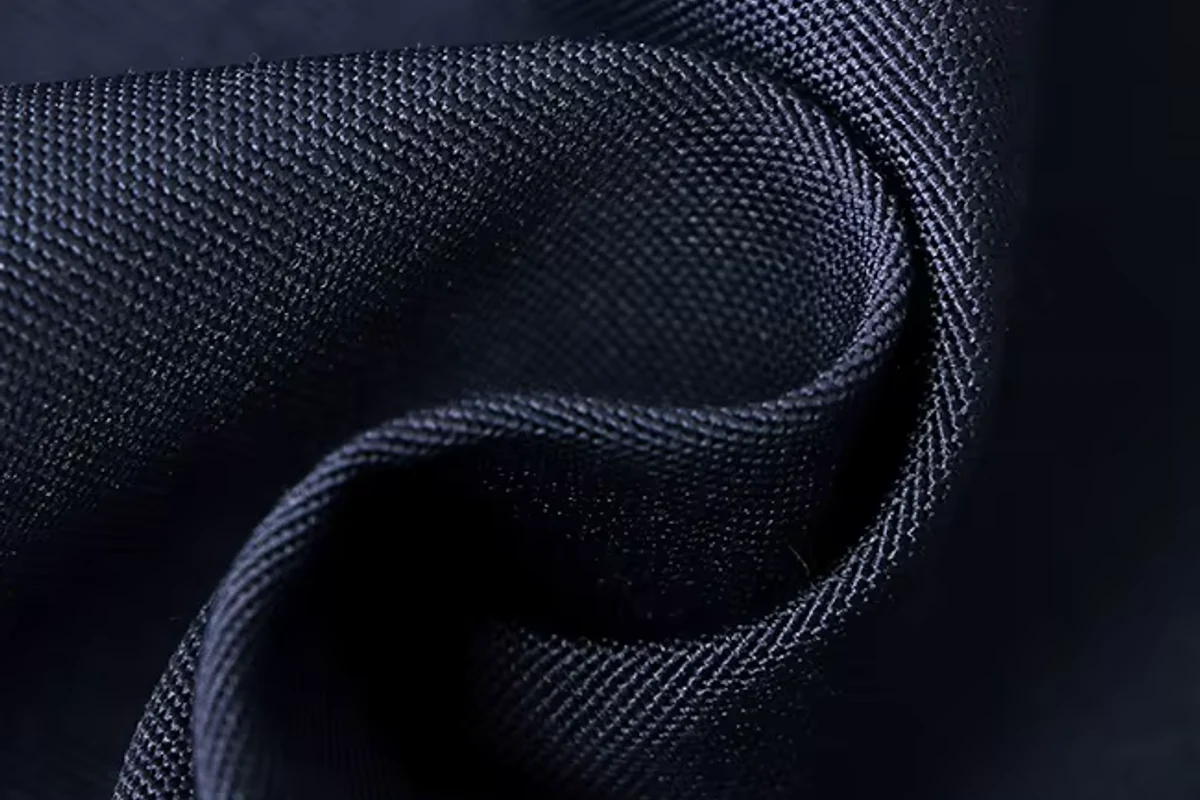
Canvas, Denim, and Leather Panels
The fabric body and any leather sections give the apron different textures, weights, and construction details.
- Thick Canvas
Thick canvas gives the apron a firm woven body. It is a starting point for workshop designs with larger pockets and reinforced seams. - Denim
Denim brings a visible twill texture to a work apron, making the fabric itself part of a workshop uniform or branded workwear design. - Leather Panels
Leather sections create a contrasting surface and structure against the fabric body. The sample brings the leather type, panel positions, and joins together in one construction. - Weight and Layering
The work apron material reference is 300–500 g/m², depending on the material and design. Lining and leather panels add layers, so the assembled sample gives a fuller picture of weight and feel than the base fabric alone.
Coverage and Fit for the Working Day
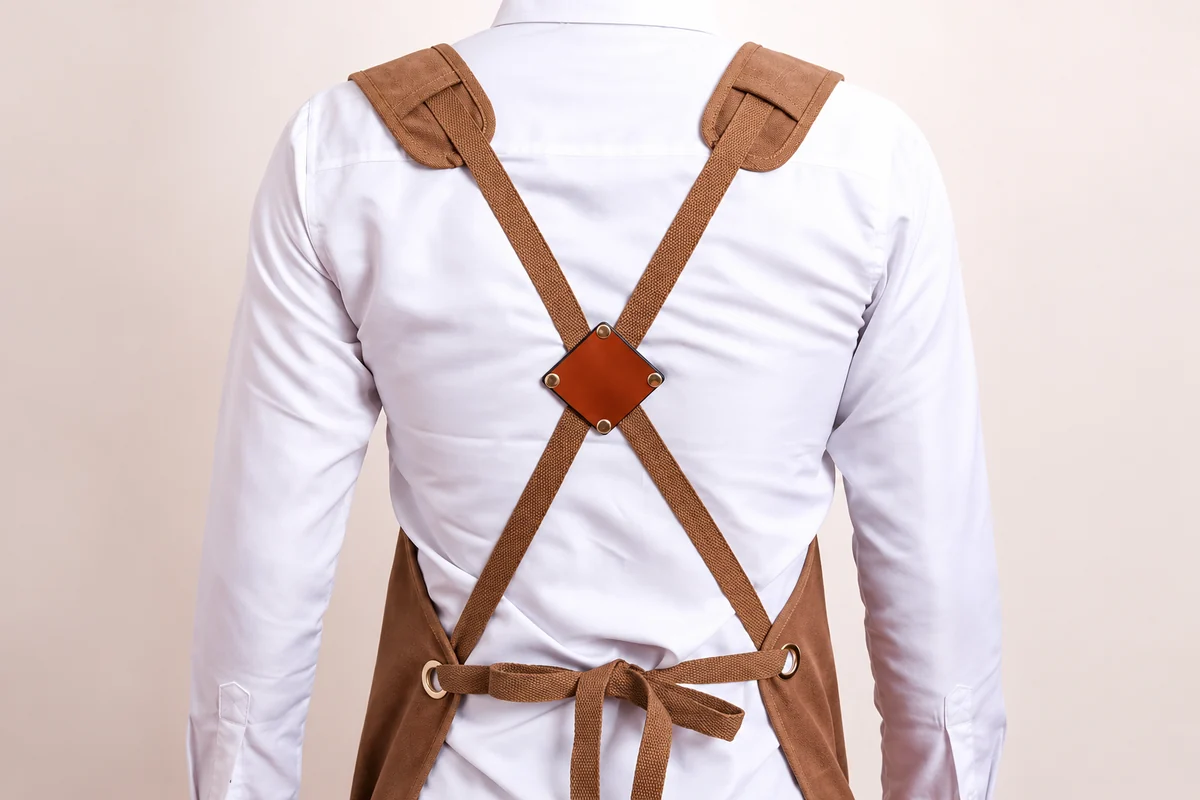
Body dimensions, wider straps, and lower panels shape the coverage while allowing for the wearer’s movements and tool layout.
- Body Length and Width
General adult apron references are 70–90 cm long and 60–80 cm wide. The finished work apron dimensions are tailored to the wearer and task rather than fixed to these starting measurements. - Wider Shoulder Straps
Wide shoulder straps spread contact across the shoulder area. Their width and position are developed together with the finished apron and pocket layout. - Wider Waist Ties
Wider waist ties help keep the apron body in position. The general adult tie-length reference is 90–120 cm; the finished measurement follows the required fit and fastening. - Lower-Body Coverage
A full-length body or additional leg panels extend coverage lower down the body. A fitting sample shows how the hem and panels sit during standing and movement before pattern approval.
Give Work Aprons Your Brand Identity
Fabric color, raised embroidery, leather patches, and labels give workshop and workwear ranges distinct brand details.
- Fabric Color
A Pantone reference or supplied swatch guides the color brief. Canvas and denim can show the same color differently because their texture and finish affect its appearance; the selected fabric sample provides the color reference. - Embroidered Logos
Embroidery adds raised thread detail to canvas, denim, and suitable work apron panels. Compact logos suit this method; large or intricate artwork needs to be reviewed on the sample. - Leather Brand Patches
A leather patch gives the brand mark a separate surface against the main fabric. Its shape, placement, and logo treatment can be developed around the leather selected. - Brand and Care Labels
Woven brand labels provide a small identification detail, while care and composition labels carry product information. Their wording should match the materials and finish in your apron.
Work Apron Materials and Documentation
The base fabric, lining, and leather panels determine the finished construction; supporting documents apply to their stated materials and scope.
Raw Material Choices
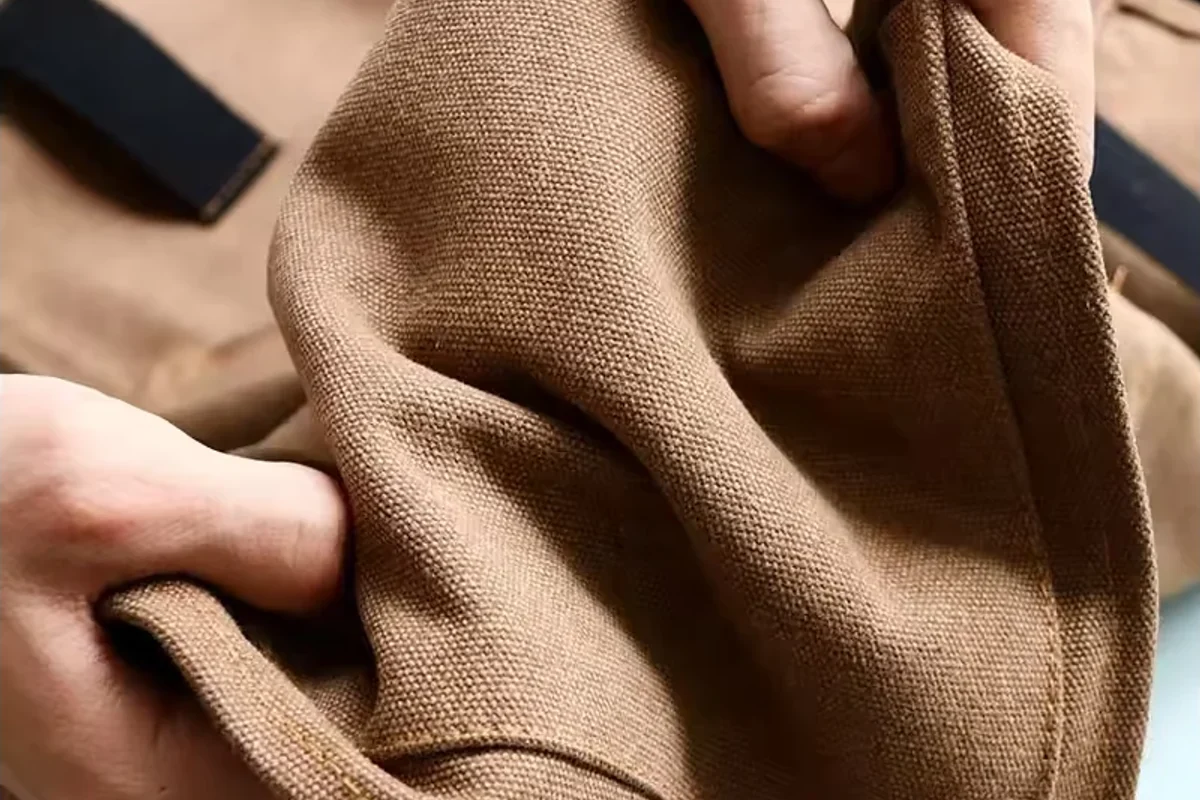
Thick canvas and denim can form the apron body, with leather sections added where the design calls for them. A sample combines the base fabric, lining, and panels to show the planned construction.
Discuss Materials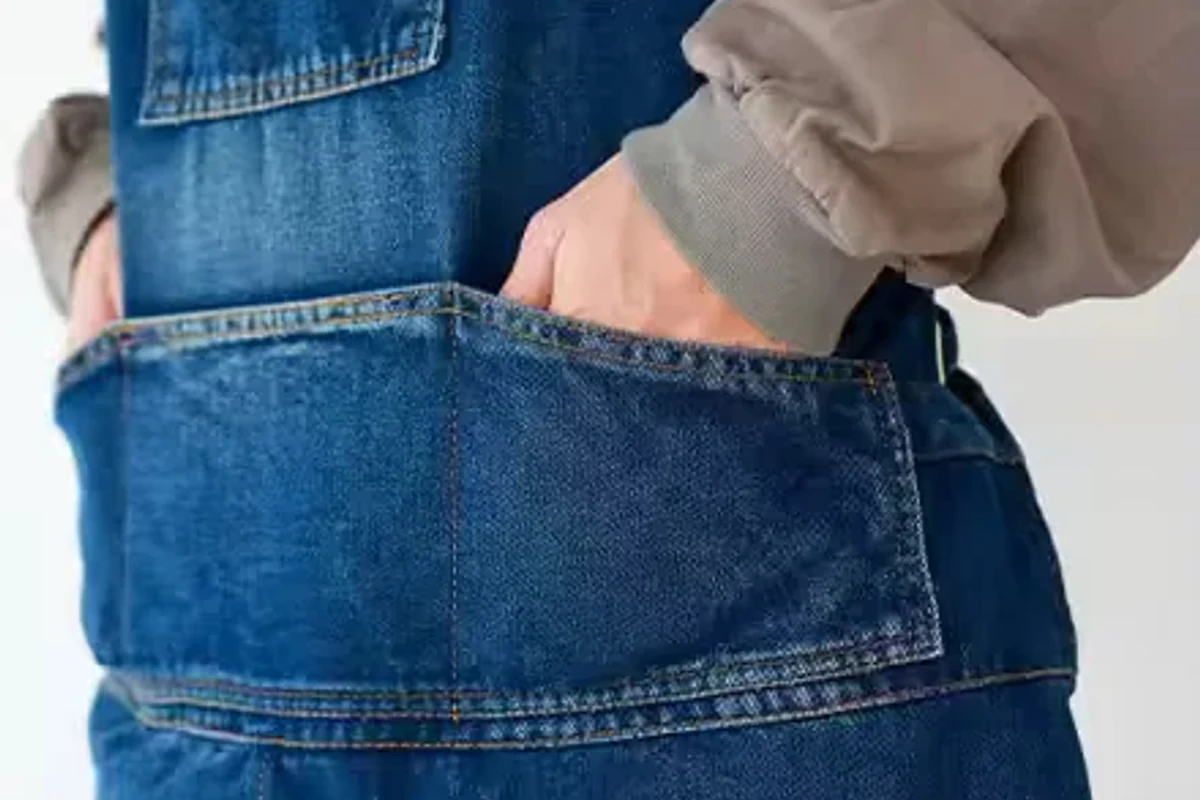
Fabric Body or Leather Sections
Canvas offers a firm woven surface and denim has a twill texture. Leather sections add a contrasting surface and change the joins, flexibility, and care needs of the assembled apron.
Compare Materials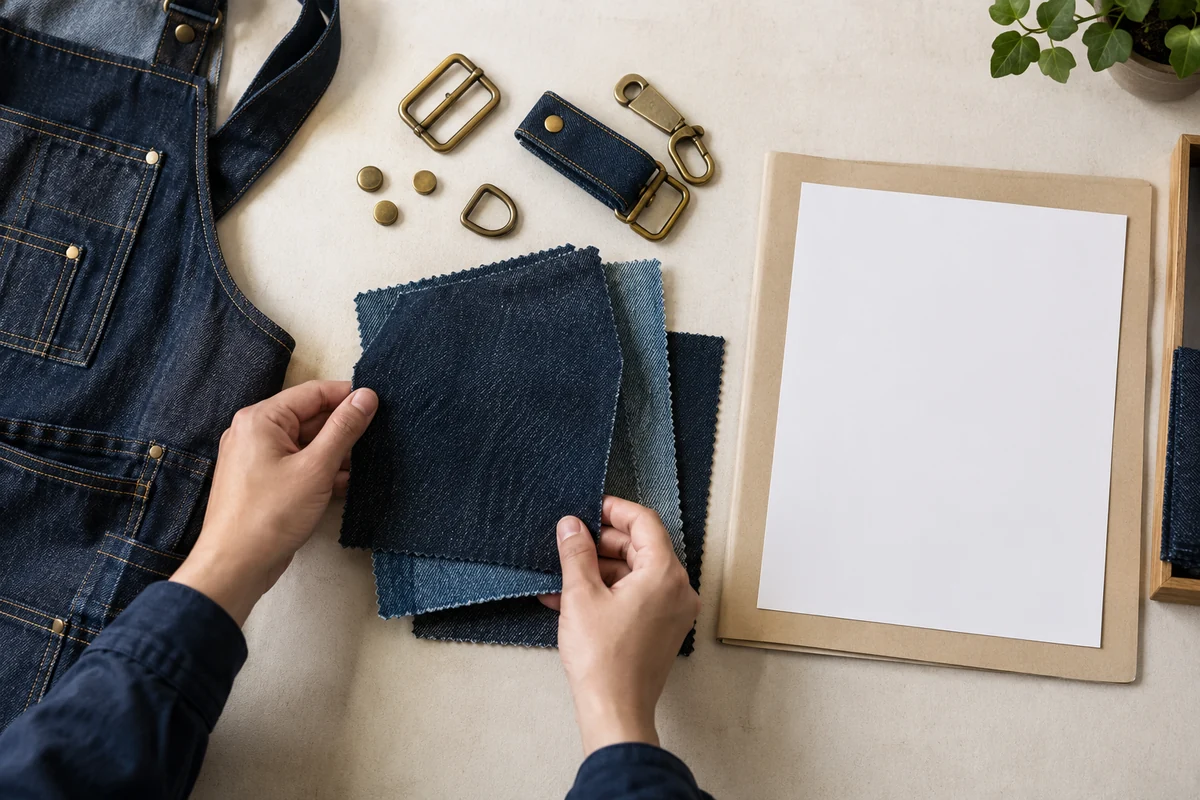
Certificates and Report Scope
Our documentation includes ISO 9001 and BSCI. Relevant material records may include OEKO-TEX Standard 100 or GRS documents and leather suppliers’ LWG records. We can help identify the holder and covered scope of the applicable copy.
Ask About Documentation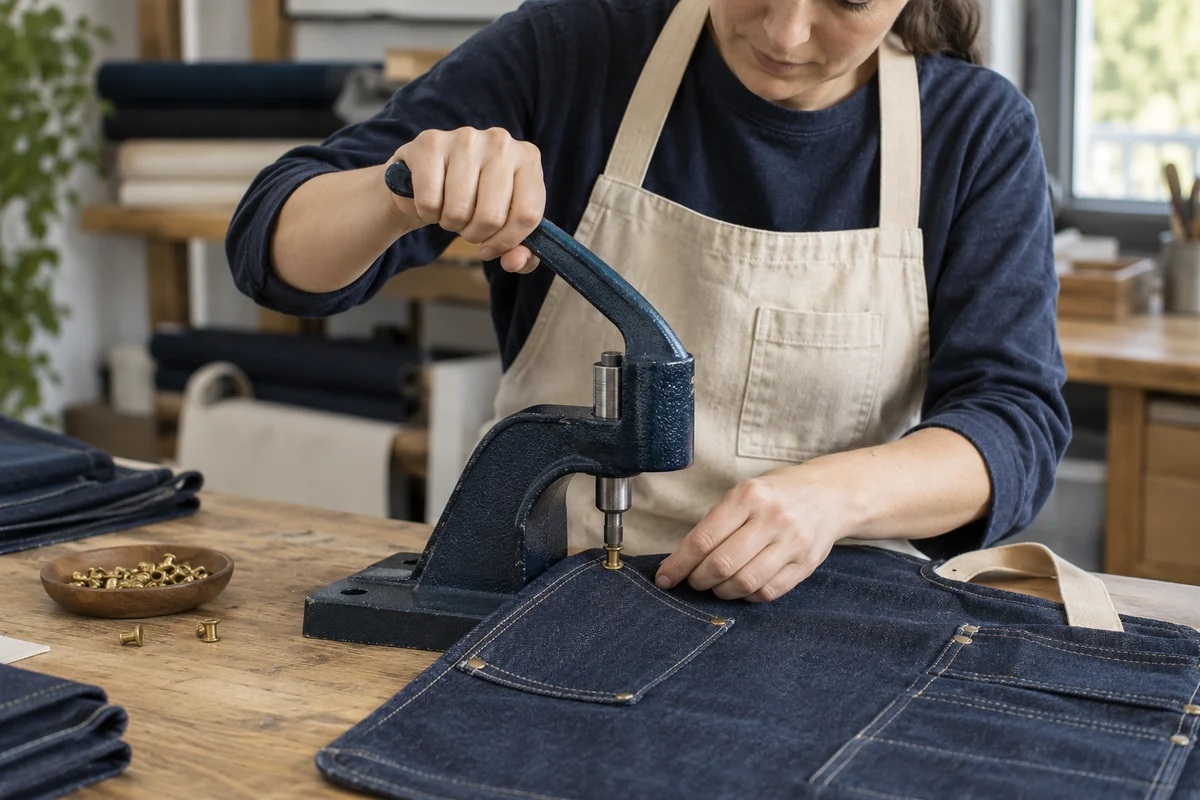
See How Your Work Aprons Are Made
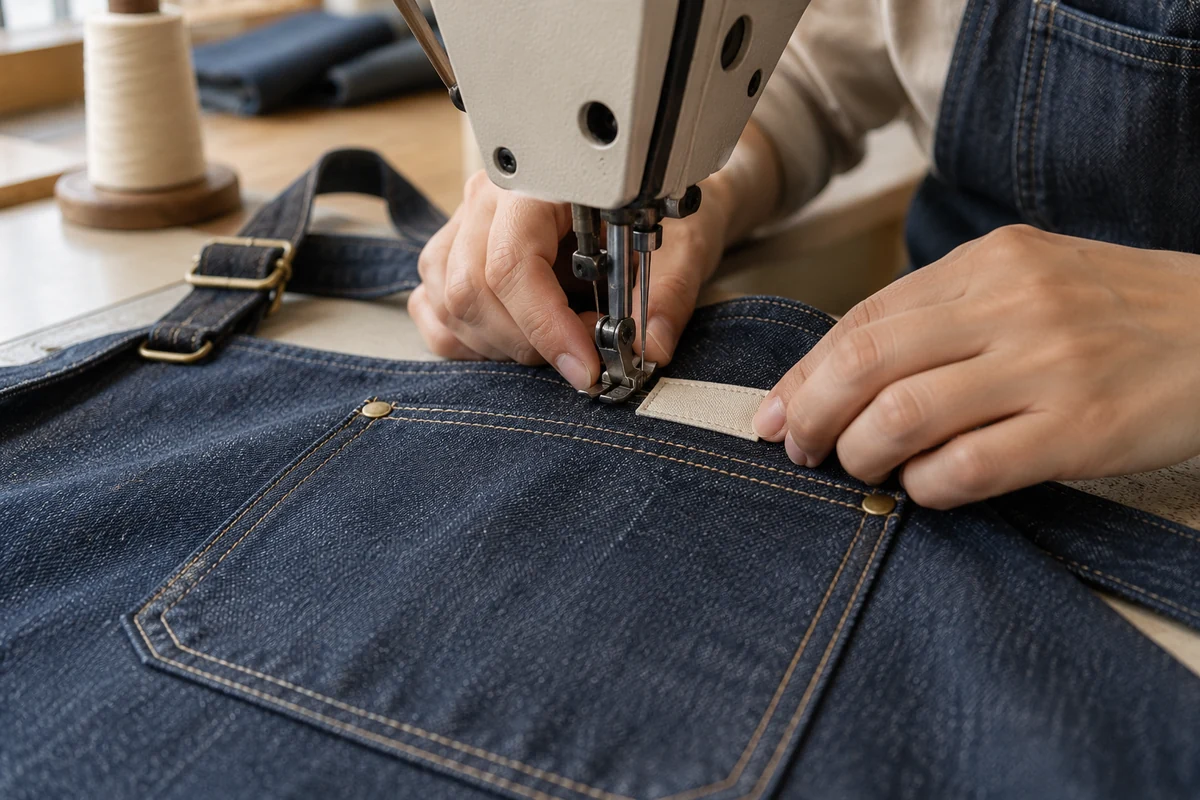
Pattern cutting, pocket assembly, bartacking or rivet fitting, and edge finishing create the storage layout and reinforced joins in your work apron.
Plan Your Custom Work Aprons
Share the work apron you have in mind, the estimated quantity, and any tool photos, sketches, or reference aprons. We’ll help develop the details for your project.
Get a Custom QuoteWork Apron Ordering Questions
Ordering details include the quantity per style, sample approval, packing, and separate production and shipping schedules.