
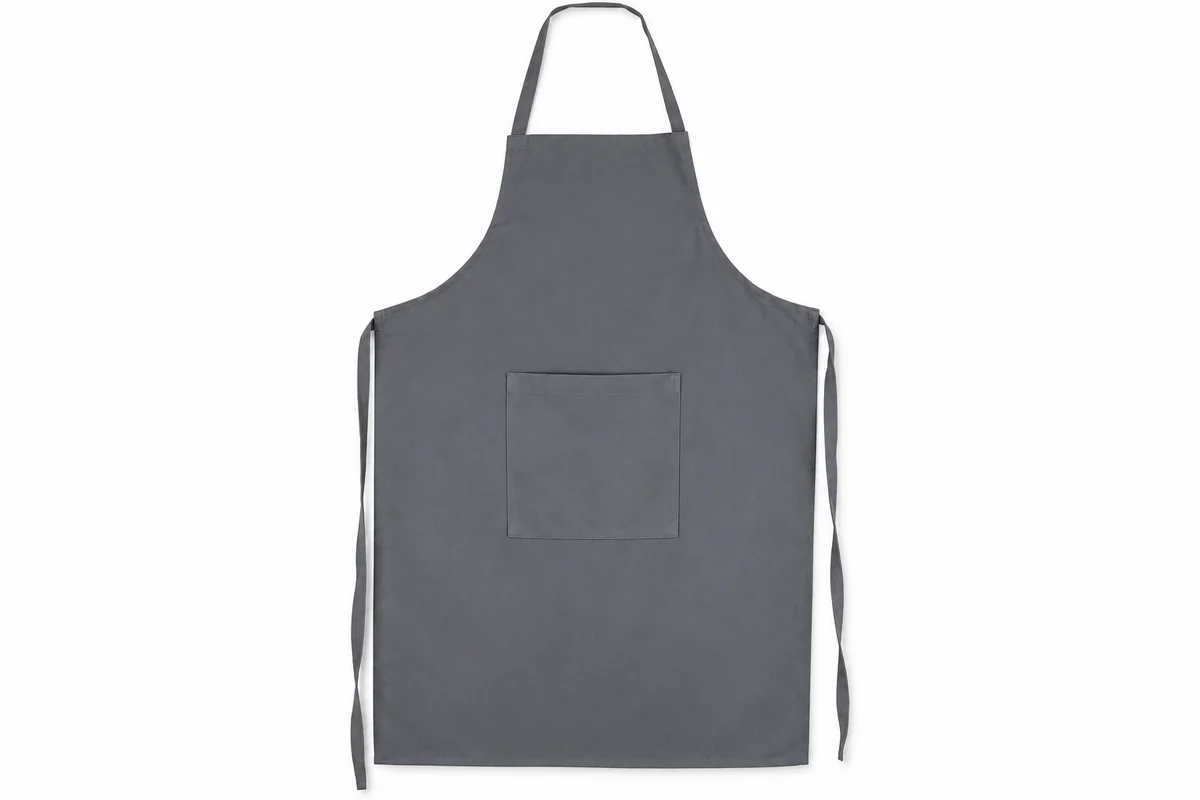
Choose apron size by the coverage your team needs, then check the finished panel and straps on actual wearers. For adult bib-style planning, LuxoApron's general adult reference is 70–90 cm in body length and 60–80 cm in body width, approximately 27.6–35.4 × 23.6–31.5 inches. These are starting ranges for custom development, not fixed S, M or L sizes.
A useful size specification separates the apron body from its neck or shoulder straps and waist ties. The same panel can sit differently when the straps change. Start with a well-fitting apron or a marked sketch, then review a sample over the uniform people will wear at work.
This guide focuses on fit. For the different shapes and jobs they suit, see our guide to apron types.
Adult Apron Size Chart: What Each Measurement Means
Record finished garment measurements with the apron laid flat, without stretching. Identify the measurement points on a drawing so that the buyer, sample maker and production team use the same definition.
| Measurement | Reference in cm | Approx. inches | How to use it |
|---|---|---|---|
| Bib body length | 70–90 | 27.6–35.4 | Measure from the top center of the bib panel to the bottom hem; exclude the neck strap. |
| Bib body width | 60–80 | 23.6–31.5 | Mark the width measurement line on the drawing; exclude ties and compare front and side coverage. |
| Waist apron length and width | Specify for the chosen style | Convert the agreed dimensions | Measure downward from the waistband and across the panel; the bib ranges above do not apply. |
| Neck or shoulder straps | Specify usable adjustment range | Convert the agreed dimensions | State the strap route and endpoints, and whether hardware is included. |
| Waist ties | Specify each tie separately | Convert the agreed dimensions | Measure from its attachment point to its free end; state front or back tying. |
The two numeric ranges come from LuxoApron's general adult planning information. They do not define a size for every apron category or guarantee fit for a particular body. Divide centimeters by 2.54 to calculate inches; the table rounds to one decimal place. Keep one controlling unit on the final specification.
Why Apron Length and Width Both Matter
Length determines how far the apron reaches down the body after the top edge has been positioned. Width determines the front and side area covered. A wider panel does not automatically provide longer ties, and longer straps do not make a narrow panel wider.
Check coverage during the job: reaching across a counter, bending toward a workbench, sitting or walking. A long hem may fold against the knees when seated; a short or narrow panel may leave the intended work area exposed. Pockets also need to remain within easy reach. Select the coverage that works through these movements, rather than judging the apron only while standing still.
How to Measure an Apron for a Custom Order
- Choose a useful reference. Use an apron that fits the intended wearer, or sketch the coverage needed over their work clothing. Note what should change from the reference.
- Measure the body. Lay it flat and smooth. On a bib apron, measure top-center edge to bottom hem. Record panel width at a clearly marked line. Add top-bib width when chest coverage needs closer control.
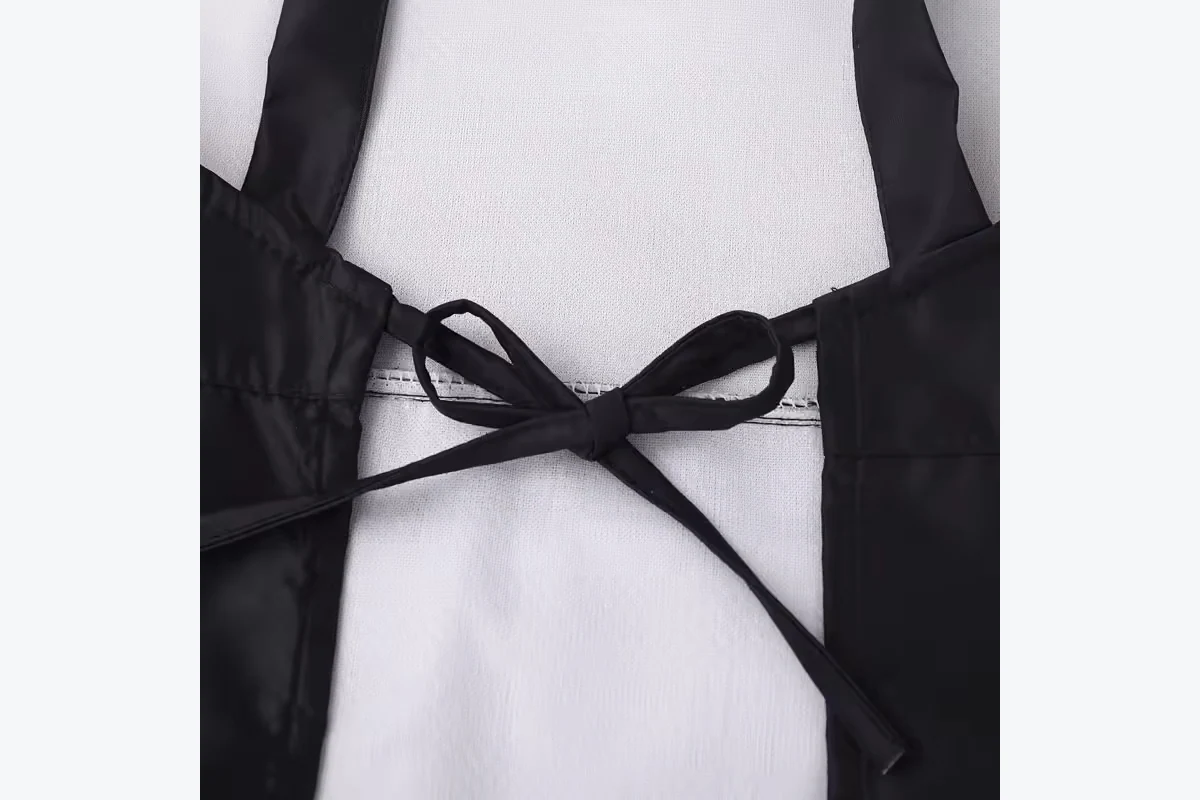
- Measure straps and ties separately. Show attachment points, free ends and adjustment limits. For cross-back designs, draw the actual route over the shoulders and through any loops.
- Locate the pockets. Record pocket width, depth and position from fixed panel edges. Include the tools or items that need to fit.
- Repeat on the wearer. Adjust the straps, tie the waist and check the top edge, sides and hem. Photograph the reference fit from front and side for discussion.
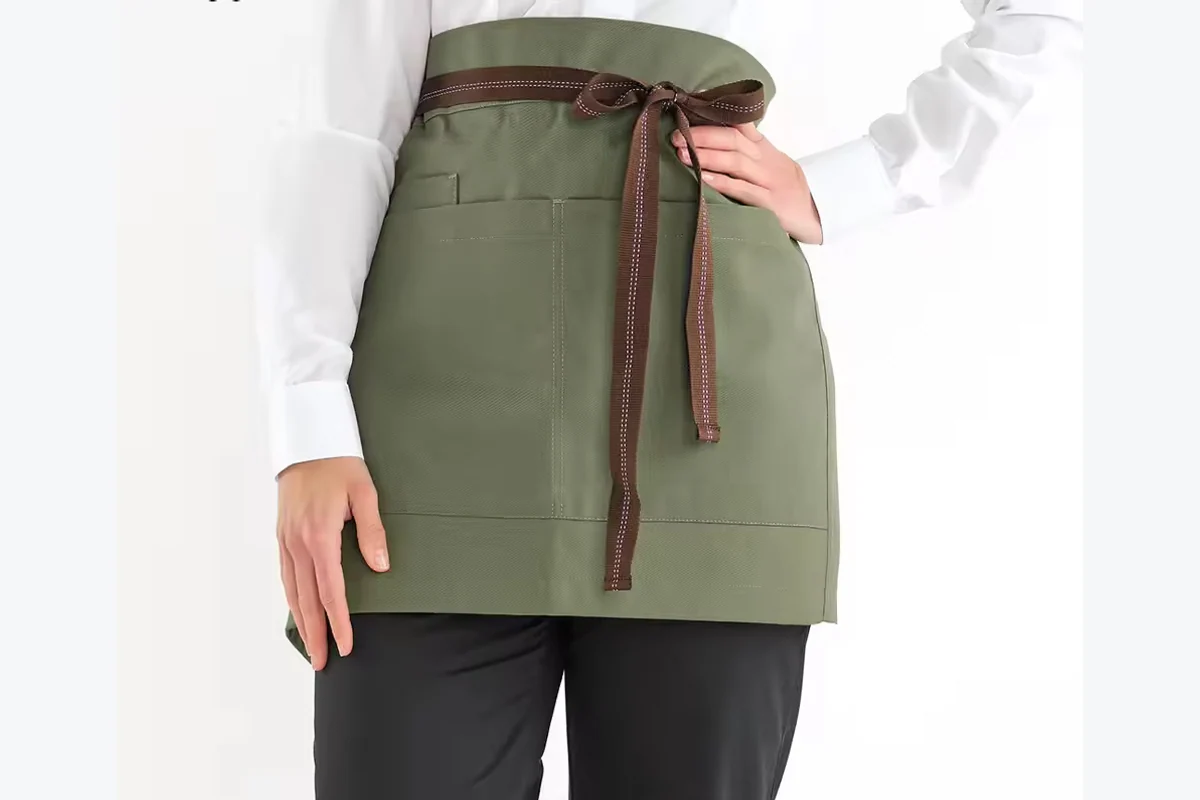
For a waist apron, begin at the waistband. Decide whether the panel should cover the upper thighs or reach farther down; then establish its own measurements.
How to Choose Bib, Cross-Back and Waist Apron Fit
- Adjustable neck-strap bib: use the neck adjustment to set the top edge, then secure the waist. Check the resulting hem height and how the neck strap feels with the pockets in use.
- Cross-back apron: shoulder straps carry the apron over the shoulders and cross at the back. Check their route, adjustment and position during reaching. A change in strap setting can also move the bib and pockets.
- Waist apron: choose it when the required coverage is below the waist. Check panel overlap at the sides, tie length and access to pockets while walking or sitting.
For a team, try the proposed fit on people with different body proportions and over the bulkiest uniform normally worn. Height alone cannot determine apron size: torso length, body width, preferred coverage and strap setting also matter. If one adjustable pattern does not suit the group, develop a second body size instead of relying on longer straps alone.
What to Include in Your Apron Size Brief
A marked drawing and a few clear measurements are more useful than a request for “adult medium.” Include:
- The job, apron style and clothing worn underneath.
- Panel length and width, the measurement points, units and size quantities.
- Strap construction, adjustment needs, tie position and pocket layout.
- Material, care method, logo placement and a reference apron or fit photographs.
Agree finished measurement tolerances before approval; a planning range is not a production tolerance. Also state whether dimensions describe the sample before washing or after the agreed care process. Material and finish affect how the apron hangs, so compare the intended fabric in the sample. Our apron material guide explains those choices.
Check Fit Before and After the Intended Care Process
Measure the finished sample against the drawing, then run a short wearer trial over normal workwear. Reach forward, bend, walk and sit where relevant. Put the intended everyday items into the pockets and check that the panel stays in a useful position, the straps remain comfortable and the ties fasten as planned.
For washable aprons, repeat the measurements and fit check after the agreed washing and drying process. CottonWorks explains that fabric construction, processing and garment care can affect dimensional change and fit in its shrinkage guidance. Do not apply a guessed shrinkage percentage to every fabric or wash a leather or coated sample using an unconfirmed method.
Record the sample version, care conditions and measurements. Resolve changes to the panel, straps or pockets before approving the production specification.
Choose Measurements You Can Check on a Sample
The right apron size gives the intended coverage while allowing the wearer to do the job comfortably. Use the adult bib ranges as an initial reference, define every measurement and approve the actual panel, straps and pockets together.
Key Takeaways
- LuxoApron's adult bib planning reference is 70–90 cm long and 60–80 cm wide.
- Measure the body separately from straps, ties and pockets.
- Set waist apron dimensions independently from bib apron dimensions.
- Check team fit, work movements and the intended care process on a sample.
Frequently Asked Questions
LuxoApron's general adult reference for bib-style planning is 70–90 cm body length and 60–80 cm body width. It is not a universal standard or a fixed size chart. Confirm the actual style's finished dimensions and fit.
In this guide, bib body length excludes the neck strap: measure from the top center of the fabric panel to the bottom hem. Ask suppliers to use the same endpoints so quoted sizes can be compared.
It may, but strap adjustment cannot change panel width or body length. Try the sample on representative wearers in their uniforms. Add another body size if the required coverage and movement cannot be achieved across the team.
Choose tie length for the wearer range, fastening position and knot or bow required. Front tying and back tying need separate checks. Specify each tie from its attachment point to its free end and confirm it on the sample.
Do not add a fixed allowance without evidence for the selected fabric and care process. Agree the finished fit requirement and evaluate a sample before and after the intended care process; use that result when adjusting the specification.
Related Resources
- Custom Bib Aprons
- Custom Cross Back Aprons
- Custom Waist Aprons
- Apron Material Guide
- Types of Aprons
- Sample Development
Send your apron style, marked measurements or reference sample, work setting, material preference and quantity. We can review the size details for sample development.
Discuss Your Apron Size