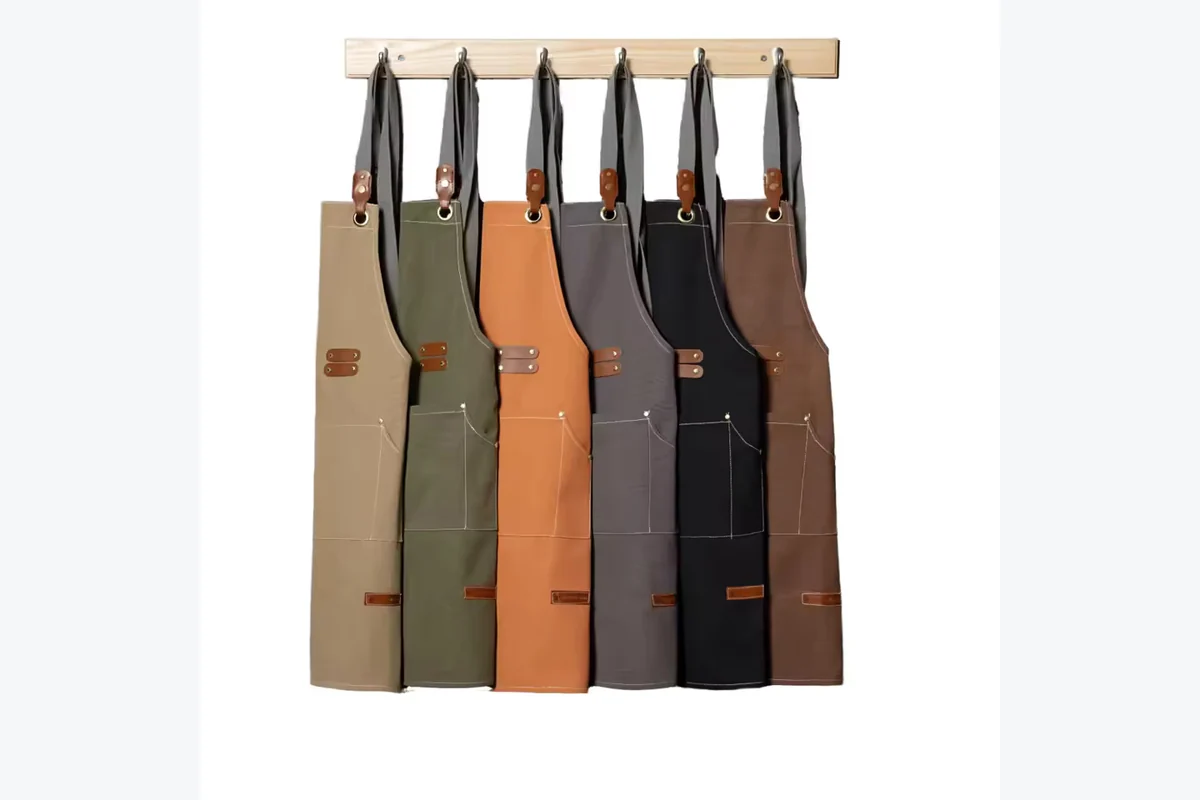
The main apron shapes are bib aprons, which cover the chest and extend below the waist, and waist aprons, which start at the waist. Cross-back describes the straps; barista, chef and work describe the intended use; leather and waterproof describe material or performance. One apron can fit several of these categories.
For a useful shortlist, decide where clothing needs coverage, what the wearer carries and how the apron will be cleaned. Then compare the details below. A café may need a cross-back bib apron with pen storage, while a server may prefer a waist apron with divided pockets.
Common Apron Types at a Glance
These eight categories are useful starting points. Their names highlight different features, so check the complete specification before comparing two designs.
| Type | How to identify it | Useful starting point for | What to check |
|---|---|---|---|
| Cross-back | Straps cross over the back and pass over the shoulders. | Cafés, retail and service roles. | Adjustment range, shoulder fit and strap movement. |
| Bib | A chest panel continues below the waist. | Food preparation, baking and floristry. | Chest width, body length and neck or shoulder straps. |
| Waist | Ties at the waist; leaves the upper body uncovered. | Table service, bars and small-item storage. | Hem position, tie length and pocket access. |
| Barista | A café-focused design, often with pen and tool pockets. | Coffee preparation and counter service. | Counter contact, tool layout and cleaning routine. |
| Chef | A kitchen-focused design, often with longer front coverage. | Cooking, food preparation and bakery teams. | Walking clearance, wash instructions and pocket needs. |
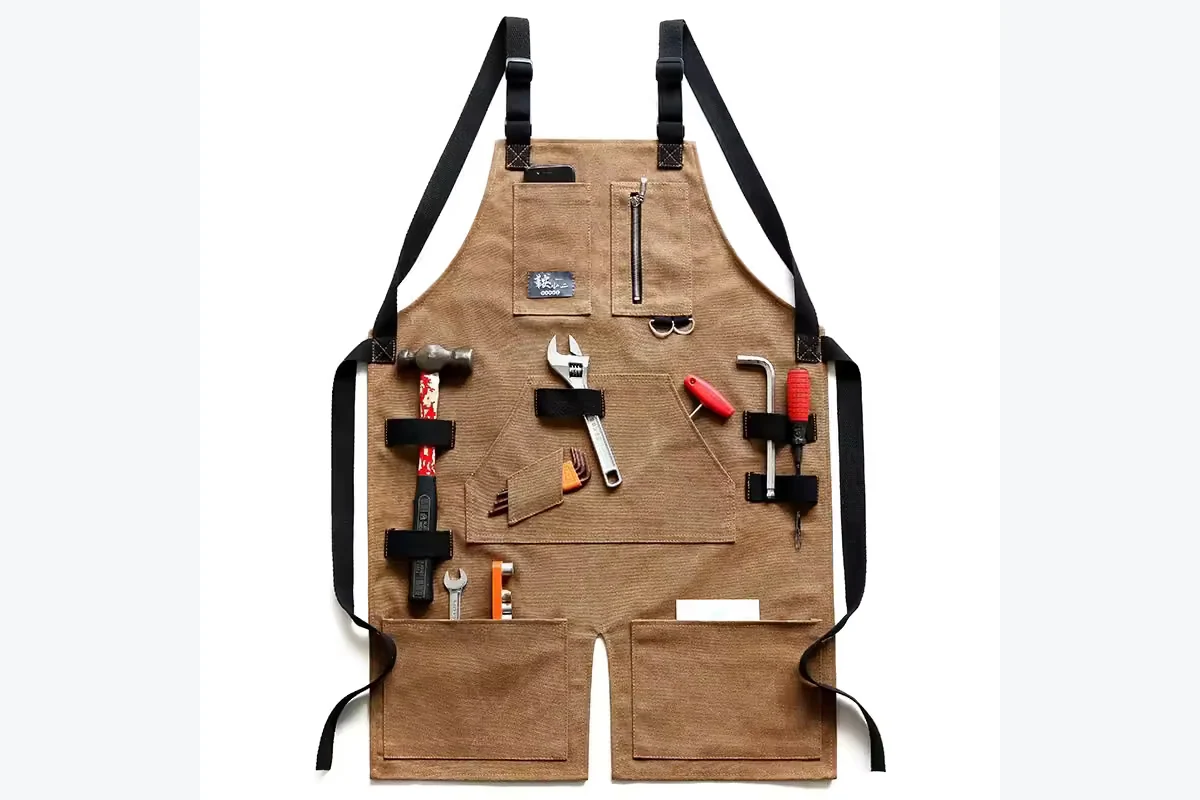
| Work | Tool pockets, loops and reinforced attachment points. | Craft benches, assembly and workshop tasks. | Actual tool fit, loaded weight and movement. |
| Leather | Genuine leather or PU faux leather; specify the exact material. | Bars, cafés and selected workshop roles. | Genuine leather versus PU faux leather, weight and care. |
| Waterproof | A material and construction selected for wet tasks. | Dishwashing, wet preparation and cleaning. | Coverage, seams, cleaning compatibility and performance evidence. |
A cross-back bib is a standard combination: Chef Works’ cross-back bib specification provides one manufacturer example of these terms used together.
Why the Small Details Matter During a Shift
Coverage affects which parts of the uniform stay behind the apron. A waist style leaves a branded shirt visible, but it also leaves the chest exposed to splashes. A longer bib adds coverage farther down the legs; its hem still needs to clear normal steps and bending.
Straps and pockets influence how the apron feels when loaded. Cross-back straps route the upper support over the shoulders. A neck-loop design places that support around the neck. Try both with the waist ties adjusted and the usual pocket contents in place. Individual fit matters more than the category name.
Build the Apron Around Four Practical Choices
- Coverage: Choose bib or waist first. Check chest width, side coverage and hem position on the people who will wear it. Use the apron size guide to prepare measurements.
- Straps: Compare neck loops and cross-back straps for fit, adjustment and ease of putting on. Confirm that staff can reach buckles and tie the apron securely.
- Pockets: List the actual items carried. A pen slot, order-pad pocket and workshop tool pocket need different widths, depths and positions. Place frequently used items within easy reach.
- Material: Match the fabric or surface to the expected dirt, wet contact and care method. Our apron material guide explains the separate material decision.
Ask for a drawing that shows these choices together. A front photograph alone may hide the strap route, pocket depth or amount of adjustment.
Which Apron Makes Sense for Each Workplace?
Cafés and coffee counters
Start with a bib or cross-back barista design when chest coverage is useful. Locate pens and small tools where the wearer can reach them without leaning into the counter. Check whether a loaded front pocket presses against the work surface. Choose the surface finish around the actual washing routine.
Restaurant front of house
A waist apron is a practical starting point when the main need is carrying an order pad, pen or payment device while keeping the shirt visible. Use separate compartments sized to those items. Consider a bib style where the job also involves drink preparation or frequent splashes.
Kitchens and bakeries
Compare bib and chef designs for front coverage and straightforward cleaning. Have staff walk, turn and bend in the intended length. Agree the laundry process before choosing fabric, trims and logo treatment. A chef label alone does not establish heat or flame performance.
Workshops and craft benches
Start with a work apron and lay out the actual tools before designing pockets. Check that handles are reachable and that contents stay in place during bending. Compare waist and bib coverage for the task, then review the total loaded weight with the wearer.
Dishwashing and wet cleaning
Start with a waterproof apron whose coverage matches the splash area. Review the material, seams and attachment points together, and confirm compatibility with the intended cleaning method. A waterproof description alone does not establish suitability for chemical exposure.
What Should Your Custom Apron Brief Include?
Give the supplier a short description of the work and a marked reference image. Then document the details needed to turn that idea into a sample:
- Wearer size range, desired coverage and measurements over normal work clothing.
- Strap arrangement, adjustment needs and preferred tying position.
- Pocket contents, item dimensions and preferred left- or right-side access.
- Material, color, logo position and the intended wash or cleaning process.
- Quantity by style, packaging, destination and required delivery date.
LuxoApron can work from product photos, sketches, size charts or reference garments. We can review body dimensions, straps, pocket positions and branding during sample development. Confirm which options suit the selected material.
How to Check the Choice Before Bulk Production
Have representative wearers try the sample over their normal uniform. Load pockets with the items used in the role, then repeat ordinary movements: reaching across a counter, sitting, bending and walking. Record where straps shift, pockets become awkward or the hem restricts movement.
Next, clean the sample using its agreed care instructions. Review fit, appearance, strap adjustment and logo condition afterward. Care depends on the finished product: the Uptown apron’s published care instructions, for example, specify a particular wash temperature and drying method. Those instructions apply to that product, so obtain instructions for your own sample.
Write approved measurements, material, pocket layout and care requirements into the production specification. A try-on supports the fit decision; a claimed technical performance needs appropriate supporting evidence.
Choose a Working Combination
Choose coverage first, then combine straps, pockets and material around the job. The right shortlist may contain a cross-back barista bib, a waist service apron and a separate waterproof apron for wet tasks. Check each design with its intended wearer and cleaning routine before approving production.
Key Takeaways
- Bib and waist describe coverage; the other common names highlight straps, uses or materials.
- Select pockets for real items and check their position during normal work.
- Match material and trim choices to the agreed cleaning process.
- Approve the fit, loaded comfort and care results on a physical sample.
Frequently Asked Questions
Yes. Barista describes the intended work, bib describes the coverage, and cross-back describes the straps. Specify all three when that combination matches your requirements.
Different roles may need different coverage and pockets. A shared color and logo can connect a uniform range while servers, kitchen staff and dishwashing teams use designs suited to their tasks.
Only if they serve a real purpose. Extra compartments add places to empty and clean. Start with a list of necessary items, then check access, depth and placement on the sample.
The appearance alone cannot confirm that. Ask whether the material is top-grain leather, split leather or PU faux leather, and request the relevant care instructions. LuxoApron offers material options that should be identified clearly in the specification.
Adjustment helps with straps and ties, but it does not change the body panel’s width or length. Check the intended size range on representative wearers and consider more than one body size when coverage or movement differs.
Related Resources
Send your workplace, reference style, size requirements, pocket contents, preferred material and quantity. Include your logo, cleaning routine and target delivery date so we can review the design with you.
Discuss Your Apron Design